LEAD-ACID TRACTION BATTERIES

Reliable power.
Matched to your forklift.

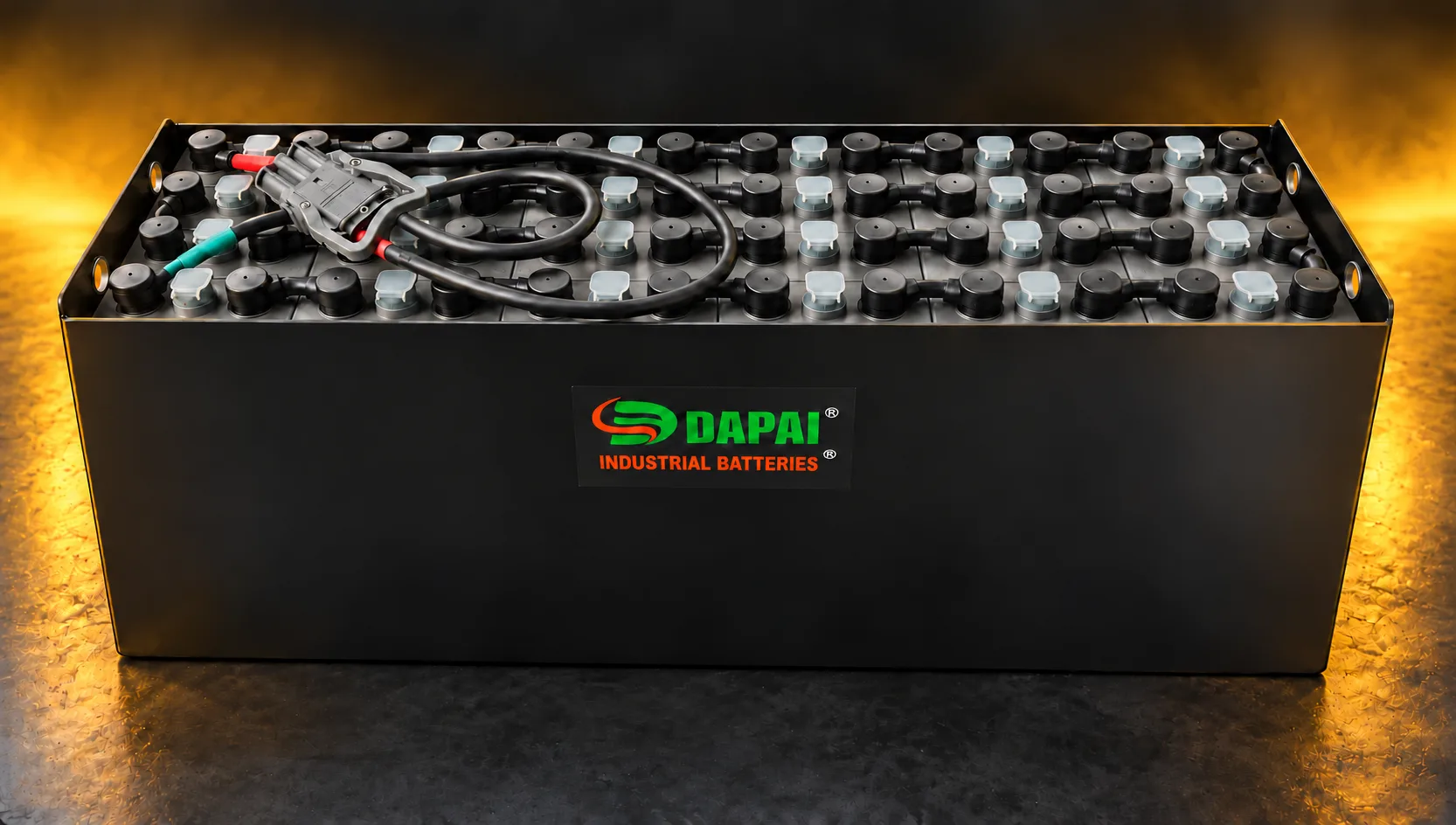
Lead-acid traction battery solutions for electric forklifts. Explore plate manufacturing, cell assembly and battery matching — with attention to every process and every connection.

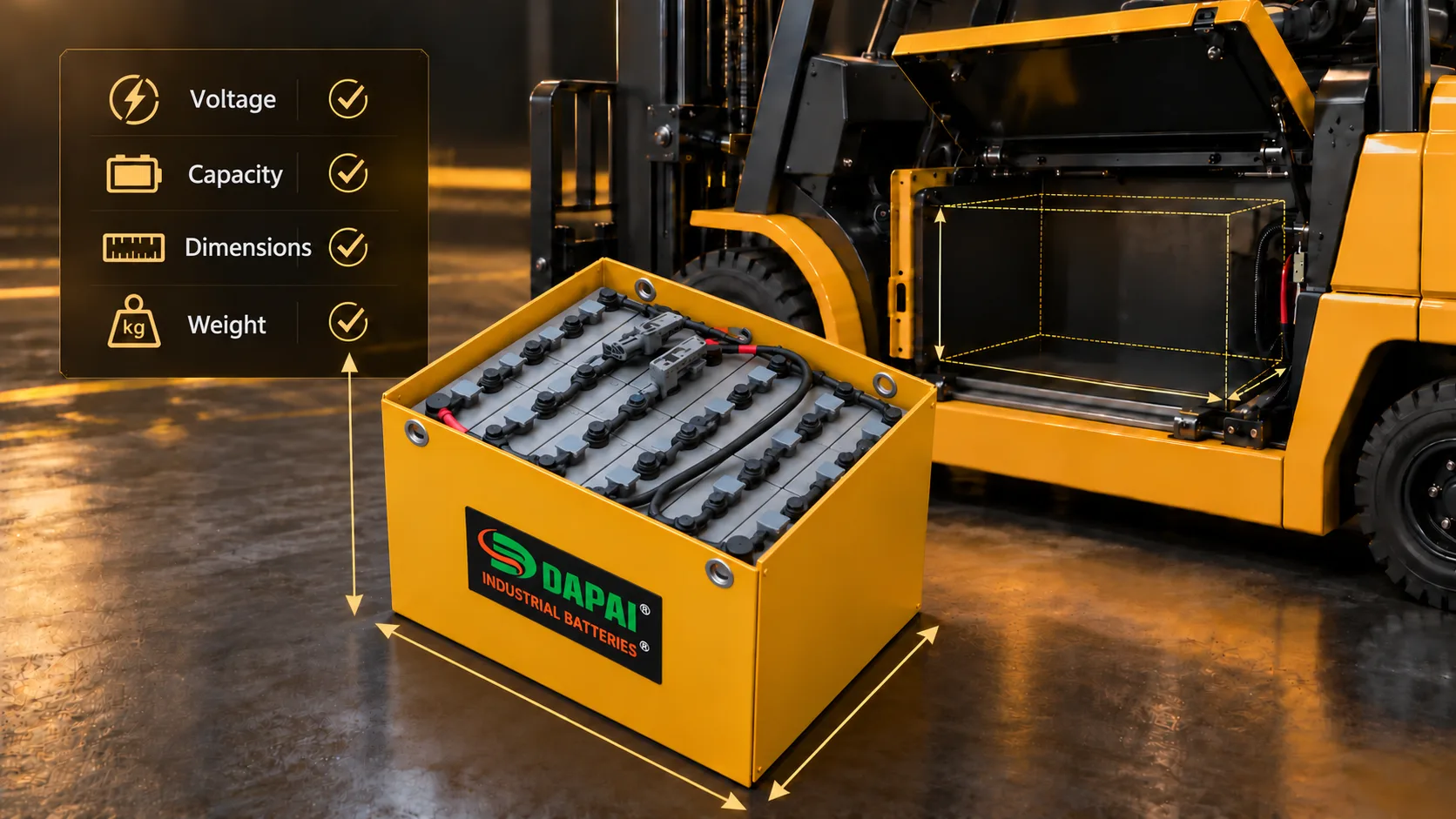
Voltage · Capacity · Tray dimensions · Weight

PRODUCT DESIGN

The right fit goes beyond capacity.

Consider the complete battery system: plate design, mechanical fit, electrical interfaces and access for service.

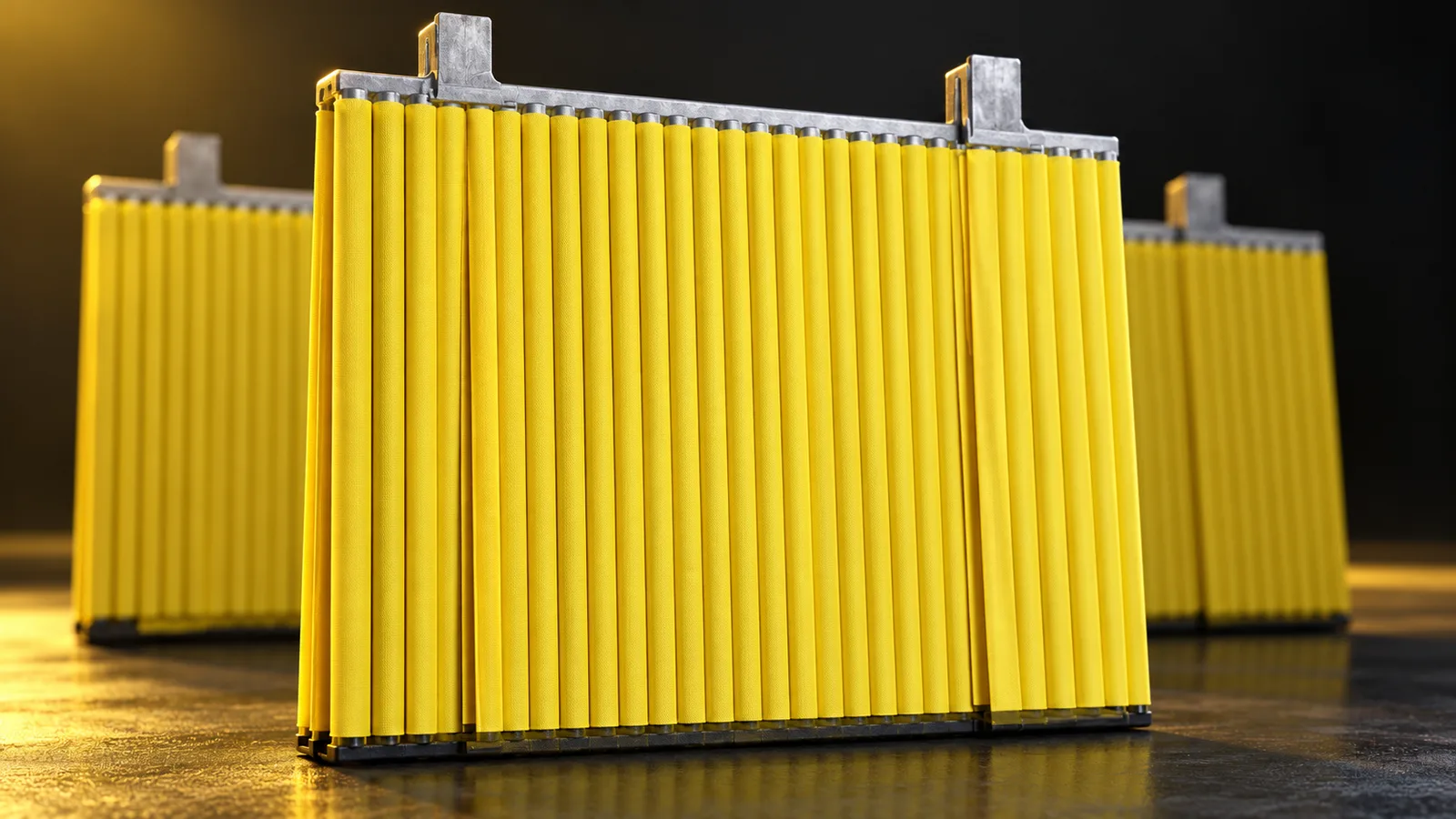
Tubular Positive Plates

Tubular construction helps retain active material during repeated traction duty. The plate structure depends on the selected model and specification.

Matched to Your Forklift

Confirm voltage, capacity, tray dimensions and weight together, allowing for installation space and the requirements of the complete truck.

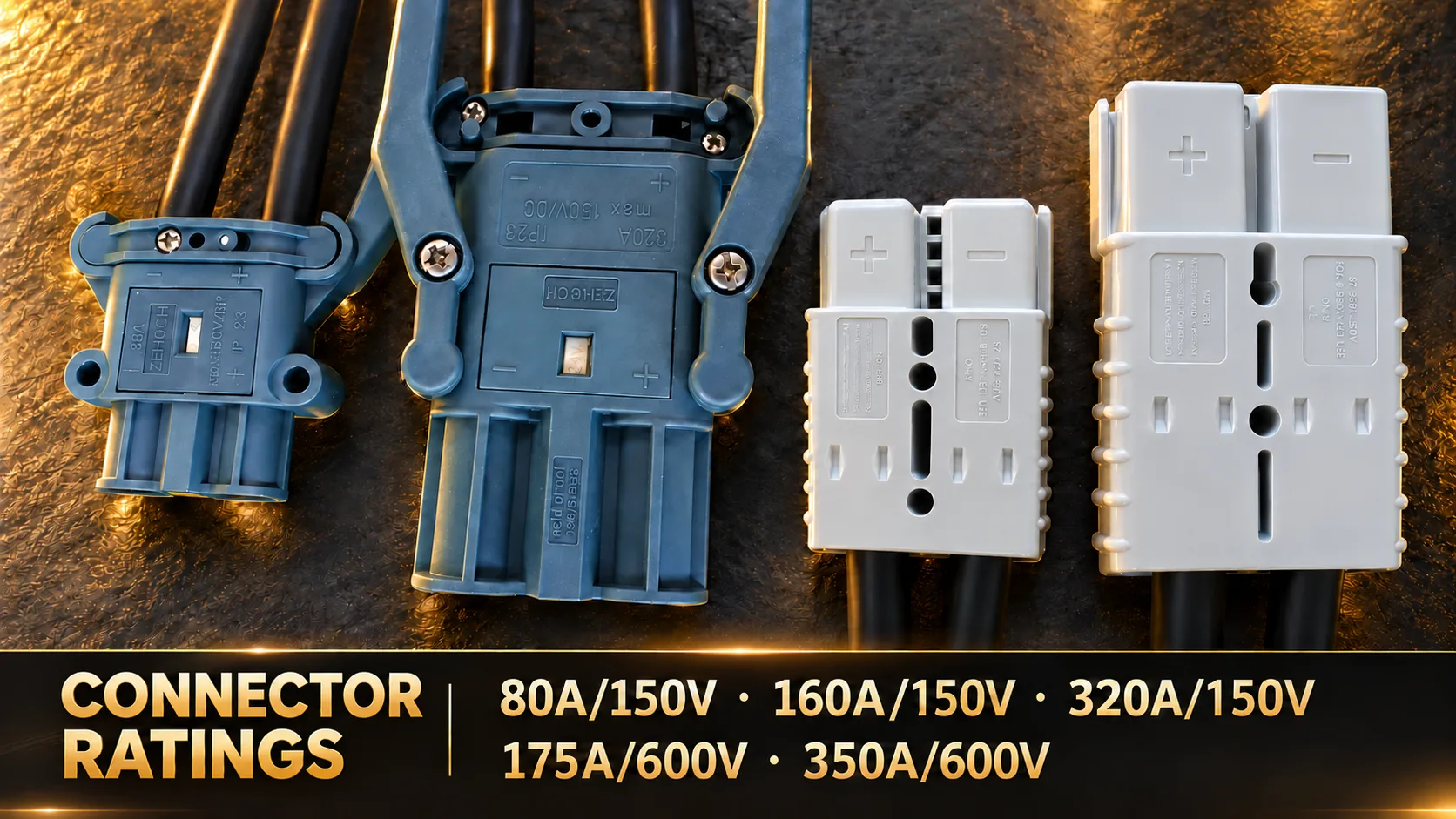
Electrical Connection Design

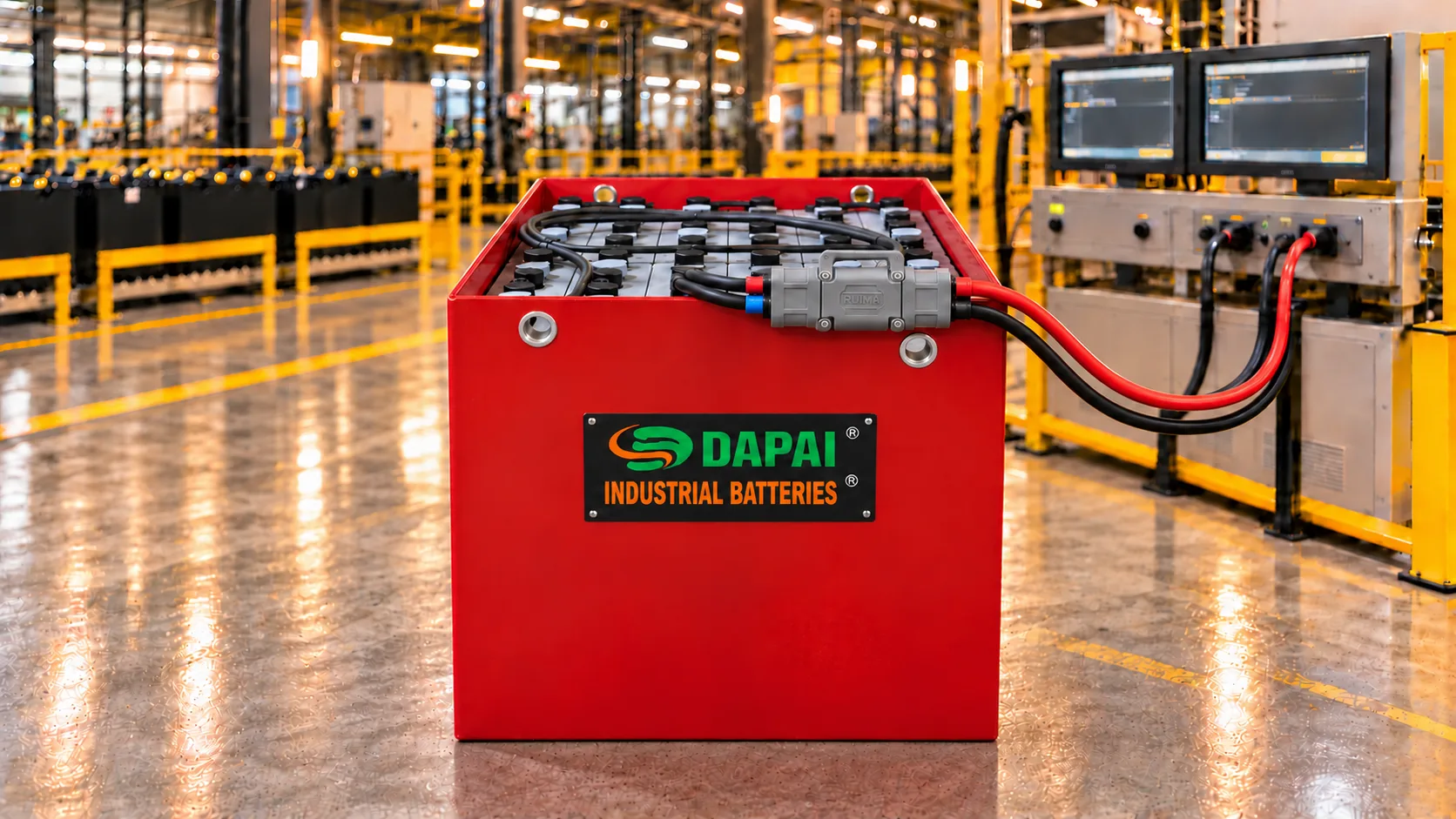
Check connector type and rating, cable routing and polarity so the battery, forklift and charger are correctly matched.

Easier Routine Maintenance

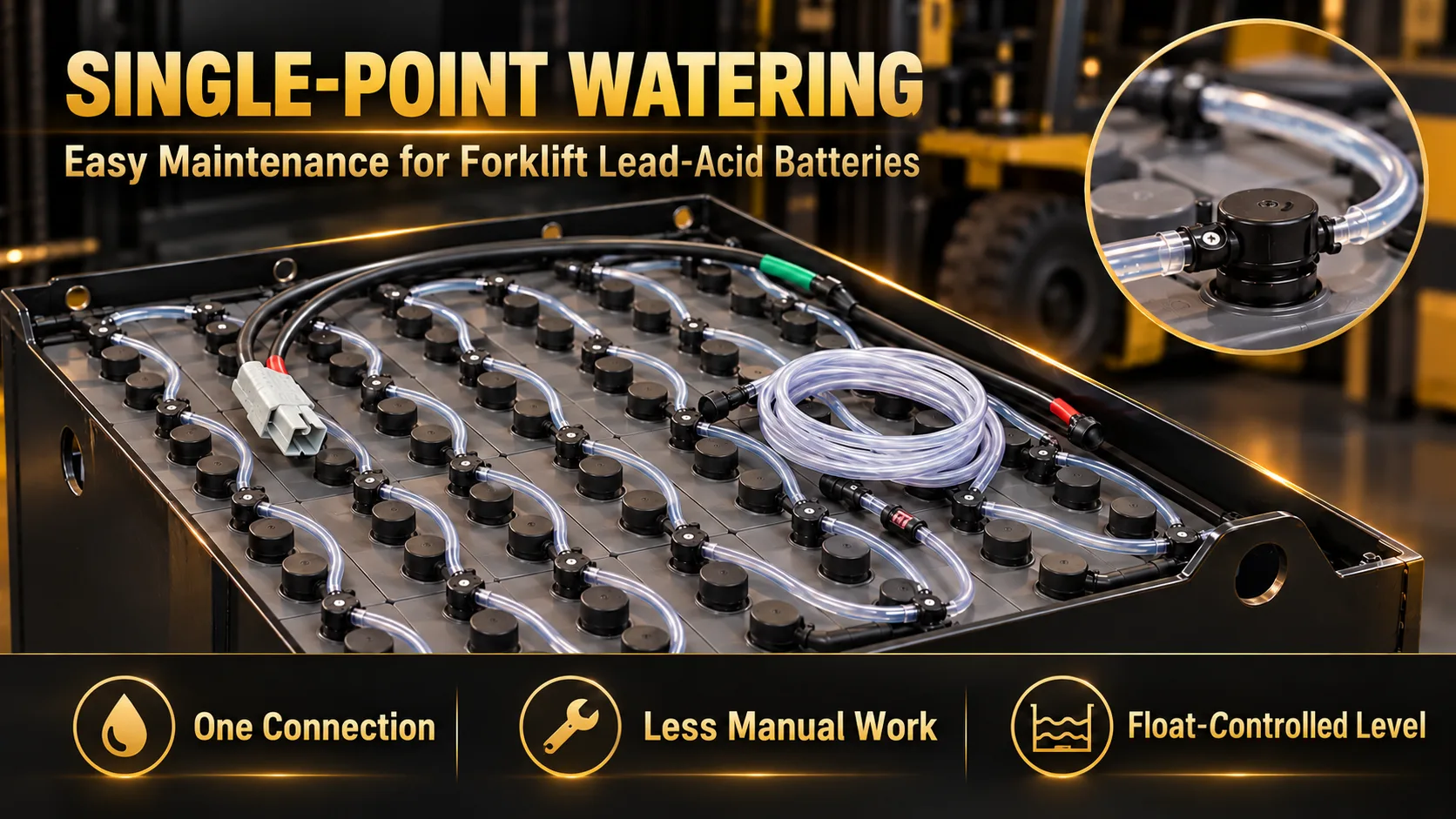
Allow access for electrolyte-level checks and terminal inspection. Where specified, a single-point watering system can simplify routine replenishment.

MANUFACTURING

From raw materials to a finished battery.

A typical lead-acid traction battery manufacturing sequence. Actual process routes and inspection requirements depend on the product and factory documentation.

01 / MANUFACTURING

Materials & Grids

Inspect raw materials before alloy and grid manufacturing. Check composition, dimensions and appearance to support consistent downstream plate production.

02 / MANUFACTURING

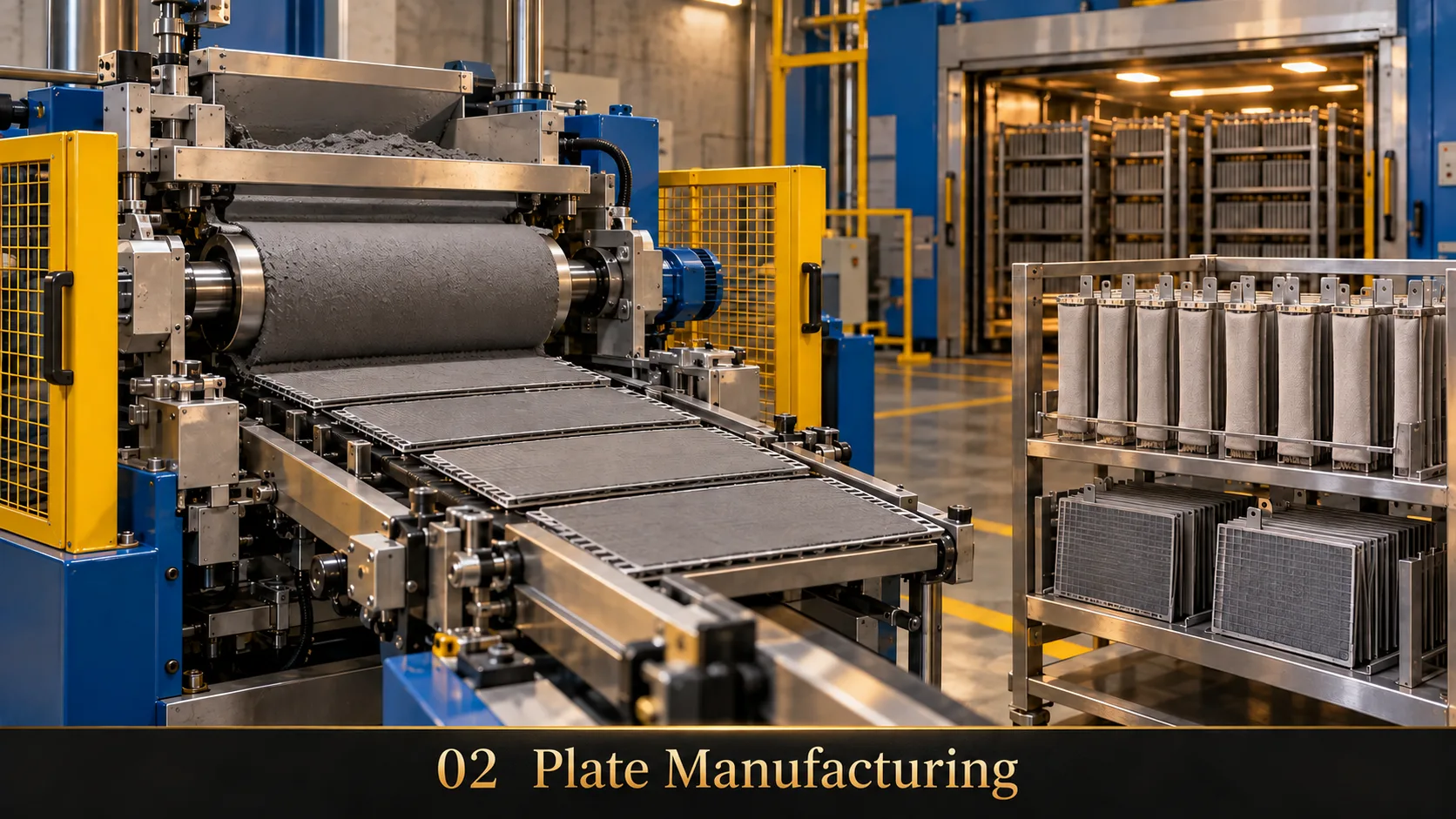
Plate Manufacturing

Prepare lead paste and apply it to grids, or fill tubular plates as required by the plate design. Curing and drying support plate and filling quality.

03 / MANUFACTURING

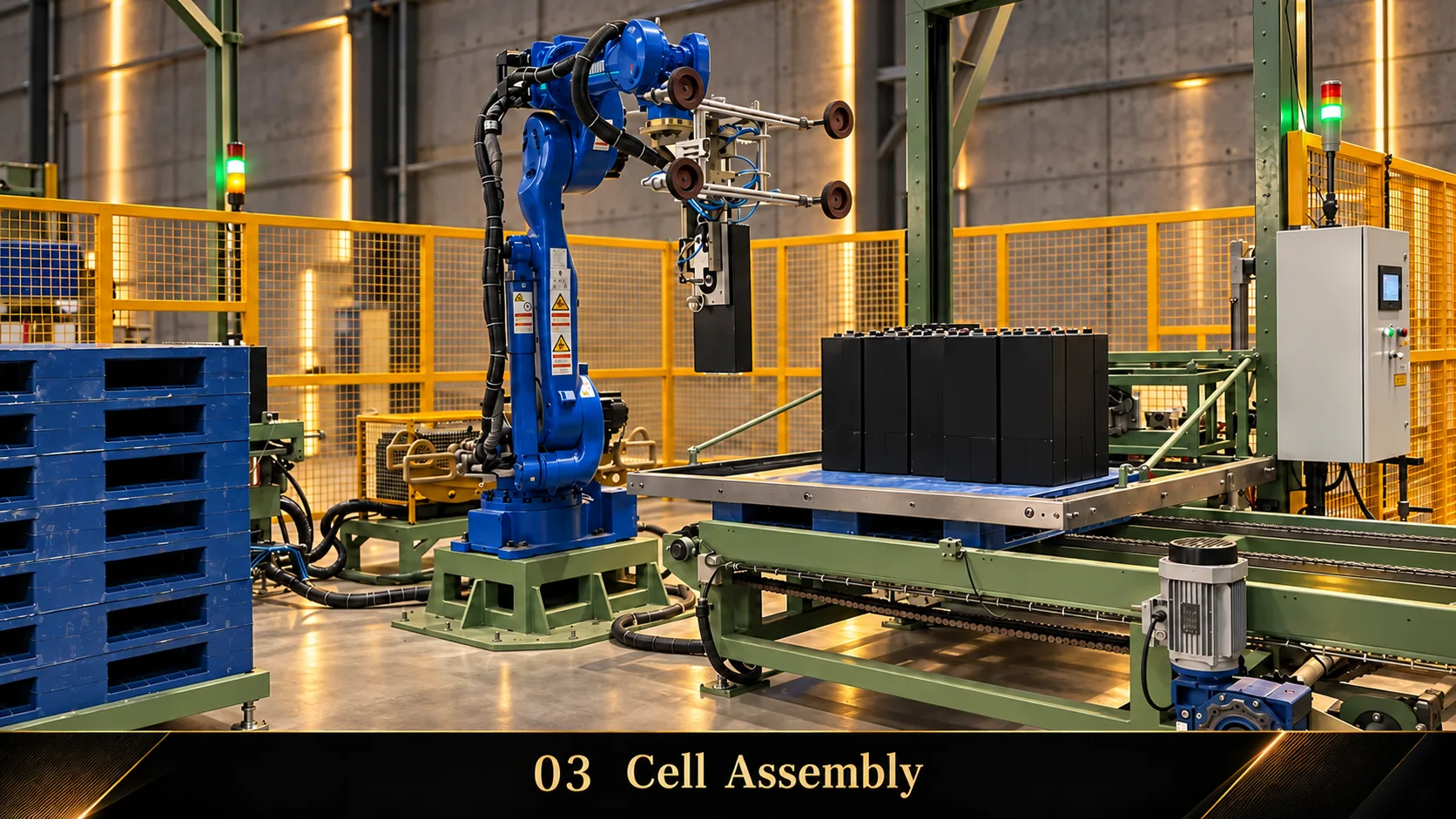
Cell Assembly

Combine positive plates, negative plates and separators. Connect the plate groups, insert them into cell cases and seal the assembly. Check polarity, joints and sealing.

04 / MANUFACTURING

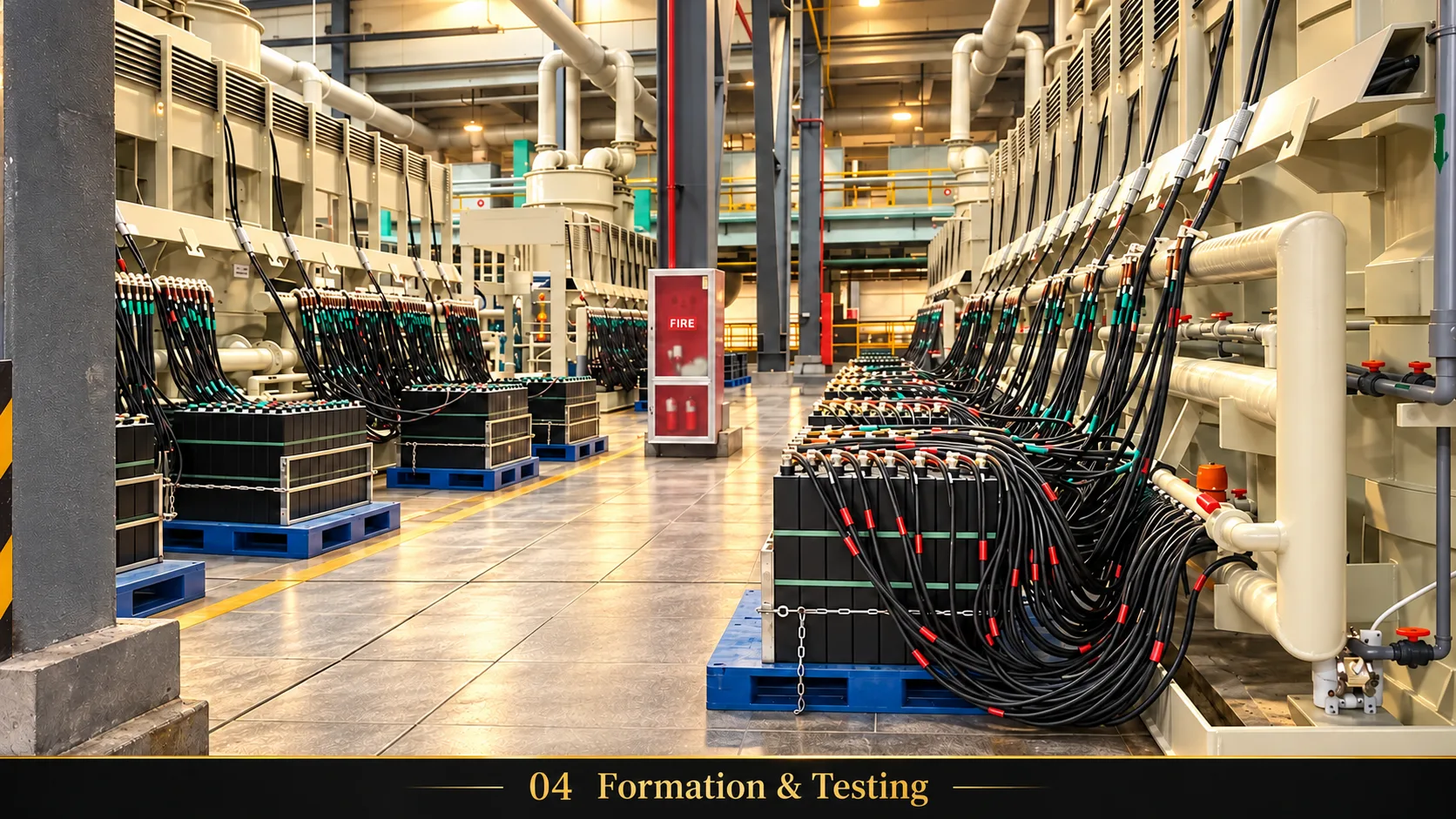
Formation & Testing

Use controlled charging to form the active material and check electrical performance according to the process route. Formation location and sequence vary by product.

05 / MANUFACTURING

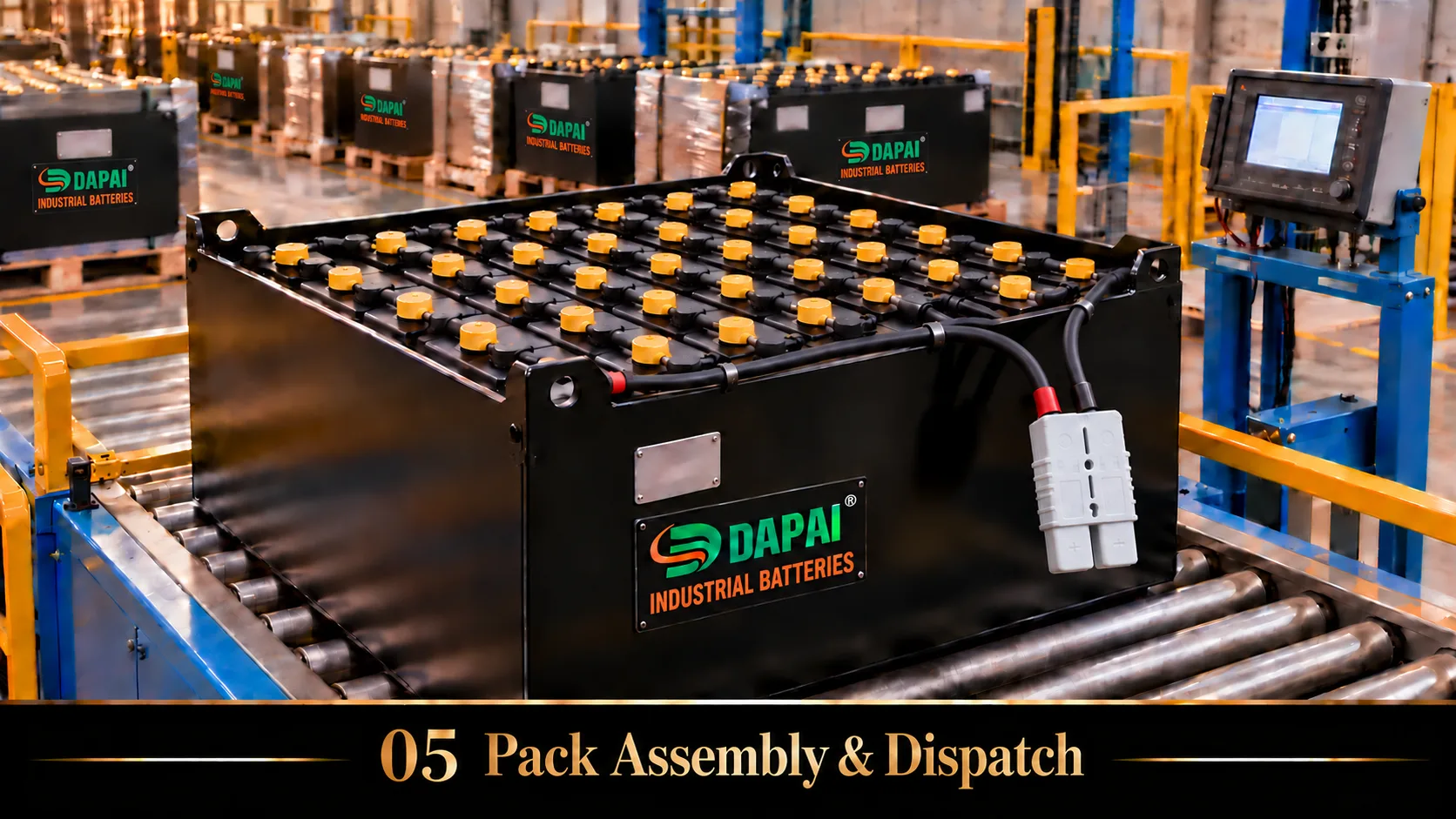
Pack Assembly & Dispatch

Match and install cells in the tray, then fit cables and connectors. Recheck voltage, polarity, appearance and identification before final inspection and dispatch.

Manufacturing visuals are AI-generated or AI-enhanced illustrations, not documentary evidence of a specific production line.

FACTORY COORDINATION

Connect manufacturing, fitment and delivery.

Factory value lies in linking requirements, process control, final checks and maintenance support. Confirm equipment, inspection records, delivery arrangements and service scope for your project.

Application Review

Share the forklift model, shift pattern and charging conditions so the proposed configuration reflects actual operating needs.

Process Control

Review the quality checks used for raw materials, plates, assembly and finished batteries. Confirm capabilities through relevant factory records.

Installation Matching

Confirm tray size, permitted weight, lifting arrangements, cables and connectors together for mechanical and electrical compatibility.

Use & Service Support

Clarify charging, watering, inspection and record-keeping requirements at handover. Service scope and response arrangements follow the agreed terms.

Product and testing visuals are illustrative; confirm model-specific data before placing an order.

QUESTIONS & ANSWERS

Select with confidence. Maintain with care.

Confirm the specification before selection and follow the product instructions during use.

Product Design

Why use tubular positive plates?

Tubular construction helps retain active material during cycling. Actual performance also depends on materials, design, manufacturing and operating conditions.

Are DIN and BS batteries interchangeable?

Their dimensional series differ. Check the selected battery and tray dimensions for the specific model; voltage and capacity alone do not establish interchangeability.

How should cycle life be assessed?

Refer to model-specific test conditions and warranty terms. Depth of discharge, temperature, charging and maintenance affect service life.

Selection & Installation

What information is needed for a quotation?

Provide the forklift brand and model, battery voltage and capacity, tray dimensions, permitted weight, connector photos and shift requirements.

Can I choose a higher capacity?

First check space, weight, electrical compatibility and charging conditions against the truck manufacturer’s requirements.

Do connectors and cables need to be checked?

Yes. Confirm connector type and rating, polarity and cable arrangement for both the forklift and charger.

Care & Charging

Are flooded batteries maintenance-free?

Flooded lead-acid batteries normally require electrolyte-level checks and watering. Follow the product maintenance instructions.

How often should water be added?

Use the manufacturer’s instructions and the measured electrolyte level. Duty, temperature and charging conditions affect the interval.

Can any charger be used?

No. The charger must match the battery voltage, capacity range, chemistry and charge profile.

START YOUR SELECTION

Bring the details. Build the right fit.

Prepare the following information before discussing a battery configuration.

01 Identify the Truck

Record the forklift brand, model and required battery voltage and capacity.

02 Measure the Space

Confirm the tray length, width and height, permitted weight and connector arrangement.

03 Describe the Duty

Share shifts, daily operating hours, charger details and the available charging window.

Your Battery Requirements

Forklift brand/model: __________
Battery voltage/capacity: __________
Tray length × width × height: __________
Permitted battery weight: __________
Connector type/photo and polarity: __________
Daily shifts and operating hours: __________
Charger details and charging window: __________