
HOME ENERGY STORAGE BATTERIES · 51.2V LiFePO4
LiFePO4 Home Energy Storage Batteries
Compare DAPAI home energy storage batteries for solar self-consumption and selected backup loads. First, check the 5.12kWh, 10.5kWh and 16kWh model tables below. Then confirm inverter compatibility, load requirements and planned expansion before selecting a 51.2V LiFePO4 system. Use the product center to compare other battery categories, or contact DAPAI with your project details.
51.2V • LiFePO4 • Smart BMS • Up to 15 Units in Parallel
Three capacities. One intelligent platform.
Home energy storage batteries in the ESS series combine LiFePO4 cells, a 4.3-inch touchscreen and mobile app connectivity according to the supplied product sheets. However, each model differs in capacity, dimensions, weight and charge current. Therefore, compare its table with the inverter specification and intended installation before requesting a configuration.
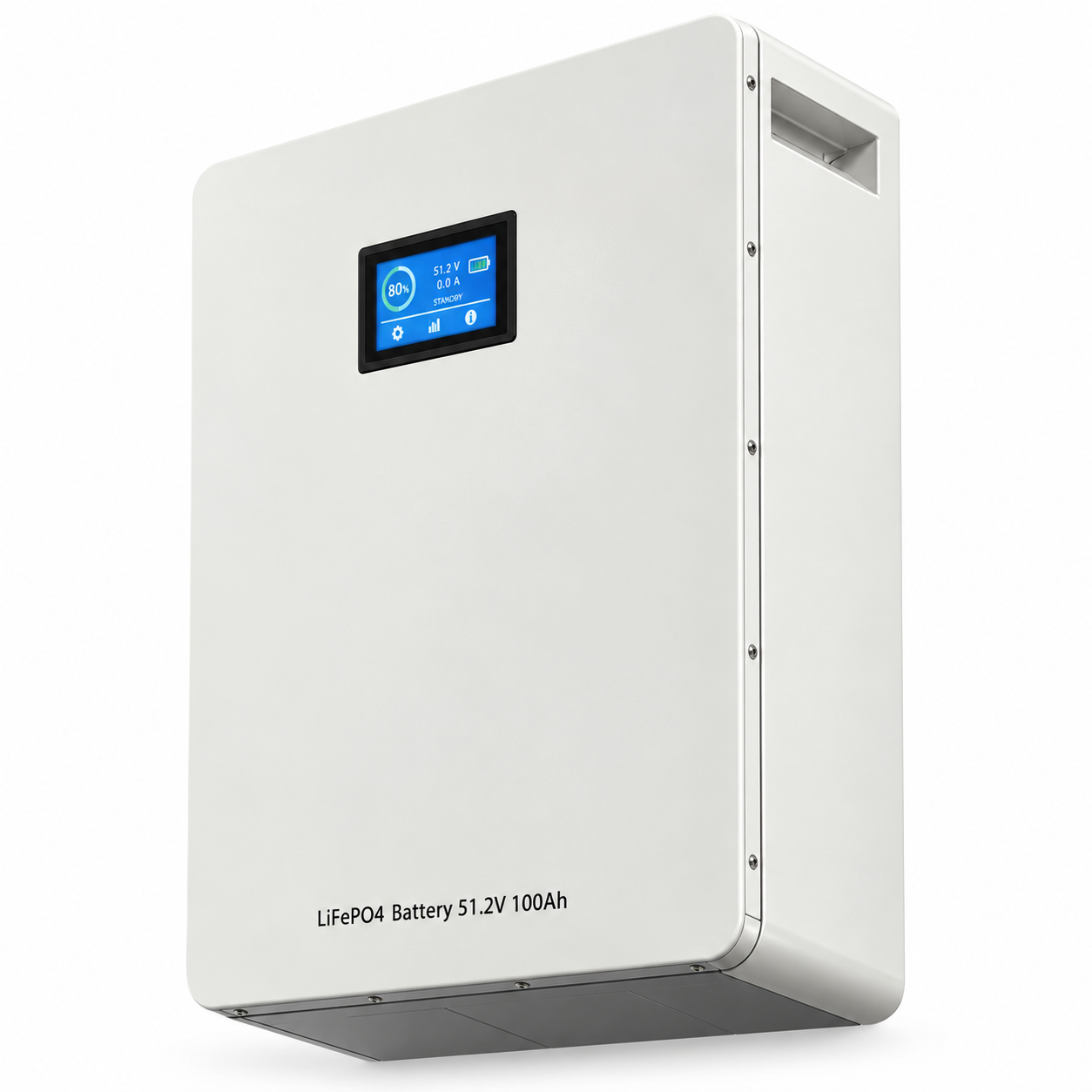
Multilingual touchscreen for easy everyday operation.
New LiFePO4 cells rated for over 6,000 cycles under the specified conditions.
Compact 56 kg design for installations with limited space.
Bluetooth / Wi-Fi and mobile app integration for convenient monitoring.
ESS-5KWH
| Cell chemistry | LiFePO4, 3.2V prismatic cells |
|---|---|
| Nominal capacity | 100Ah |
| Configuration | 1P16S |
| Nominal energy | 5kWh (5,120Wh) |
| Nominal voltage | 51.2V |
| Maximum discharge voltage | 43.2V (as shown in supplied chart) |
| Maximum charge voltage | 58.4V |
| Display | 4.3-inch touchscreen |
| Interface languages | English, Arabic, Dutch, Polish, French and more |
| Bluetooth / Wi-Fi | Supported |
| App control | Supported |
| Battery management system | Jiabaida BMS (as listed) |
| Standard charge current | 50A |
| Maximum charge current | 100A |
| Overcurrent protection | 120A |
| Short-circuit protection | 1100A |
| Operating temperature | -20°C to 55°C |
| Weight | 56 kg |
| Dimensions | 580 × 440 × 269 mm |
| Cycle life | 6,000 cycles; ≥80% initial capacity |
| Parallel expansion | Up to 15 units |
| Certifications / reports | UN38.3 / MSDS / IMDG report (per source) |
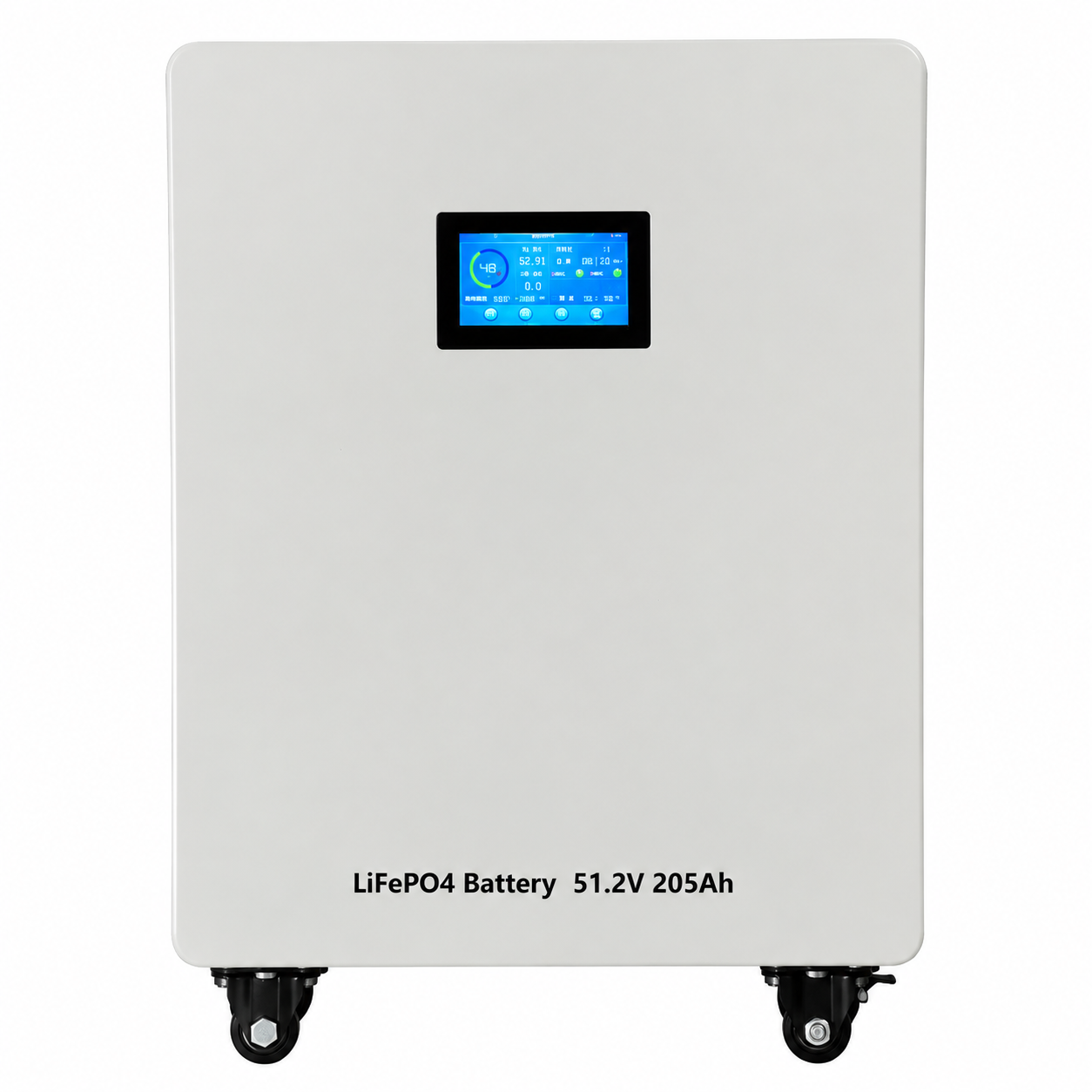
Multilingual touchscreen for easy everyday operation.
New LiFePO4 cells rated for over 6,000 cycles under the specified conditions.
Up to 200 A continuous discharge for demanding loads.
Bluetooth / Wi-Fi and mobile app integration for convenient monitoring.
ESS-10.5KWH
| Cell chemistry | LiFePO4, 3.2V prismatic cells |
|---|---|
| Nominal capacity | 205Ah |
| Configuration | 1P16S |
| Nominal energy | 10.5kWh (10,496Wh) |
| Nominal voltage | 51.2V |
| Maximum discharge voltage | 43.2V (as shown in supplied chart) |
| Maximum charge voltage | 58.4V |
| Display | 4.3-inch touchscreen |
| Interface languages | English, Arabic, Dutch, Polish, French and more |
| Bluetooth / Wi-Fi | Supported |
| App control | Supported |
| Battery management system | Jiabaida BMS (as listed) |
| Standard charge current | 100A |
| Maximum charge current | 200A |
| Overcurrent protection | 220A |
| Short-circuit protection | 1200A |
| Operating temperature | -20°C to 55°C |
| Weight | 92 kg |
| Dimensions | 690 × 470 × 260 mm |
| Cycle life | 6,000 cycles; ≥80% initial capacity |
| Parallel expansion | Up to 15 units |
| Certifications / reports | UN38.3 / MSDS / IMDG report (per source) |
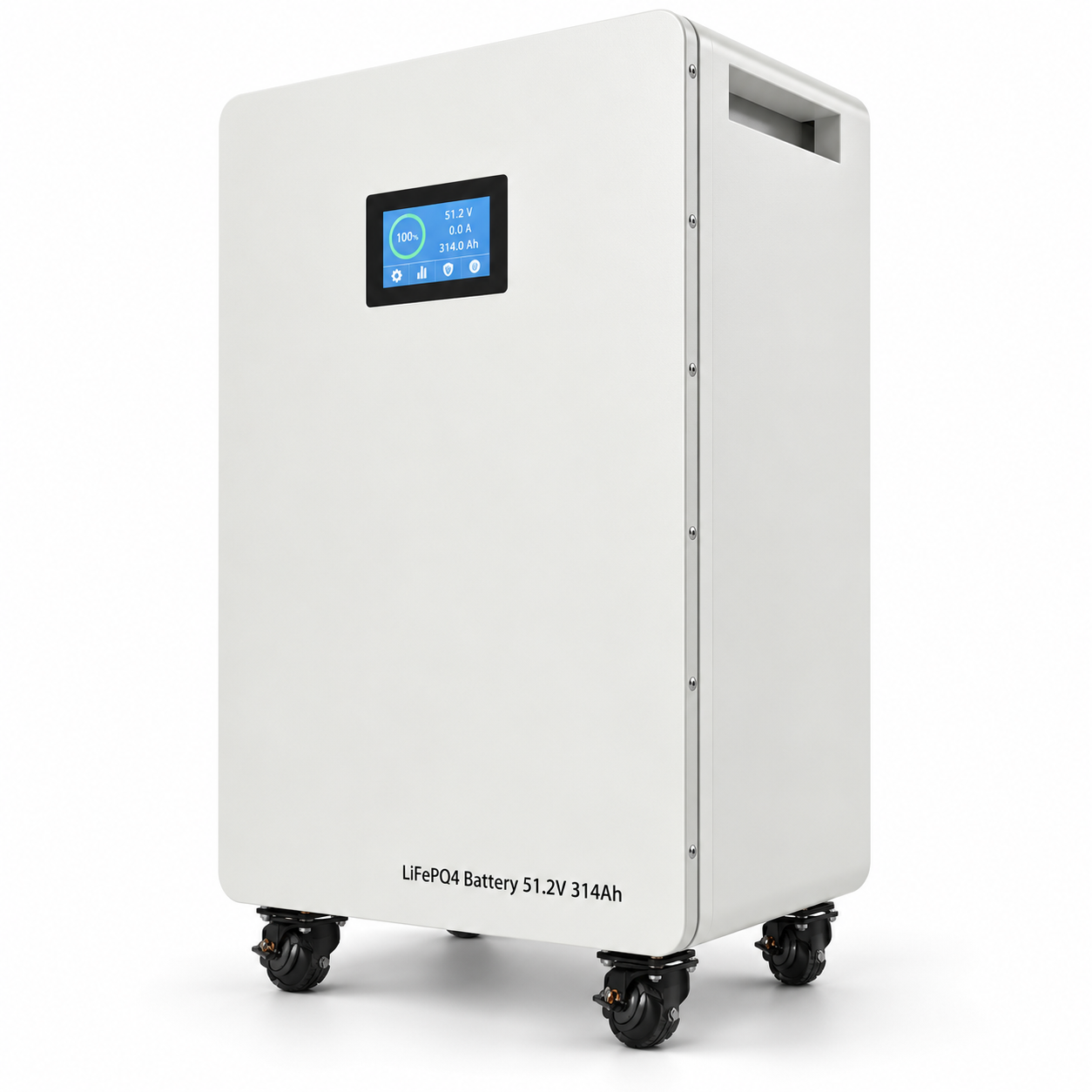
Multilingual touchscreen for easy everyday operation.
New LiFePO4 cells rated for over 6,000 cycles under the specified conditions.
16.076 kWh nominal energy with 314 Ah capacity.
Connect up to 15 units in parallel to expand system capacity.
ESS-16KWH
| Cell chemistry | LiFePO4, 3.2V prismatic cells |
|---|---|
| Nominal capacity | 314Ah |
| Configuration | 1P16S |
| Nominal energy | 16kWh (16,076Wh) |
| Nominal voltage | 51.2V |
| Maximum discharge voltage | 43.2V (as shown in supplied chart) |
| Maximum charge voltage | 58.4V |
| Display | 4.3-inch touchscreen |
| Interface languages | English, Arabic, Dutch, Polish, French and more |
| Bluetooth / Wi-Fi | Supported |
| App control | Supported |
| Battery management system | Jiabaida BMS (as listed) |
| Standard charge current | 100A |
| Maximum charge current | 200A |
| Overcurrent protection | 220A |
| Short-circuit protection | 1200A |
| Operating temperature | -20°C to 55°C |
| Weight | 123 kg |
| Dimensions | 820 × 485 × 281 mm |
| Cycle life | 6,000 cycles; ≥80% initial capacity |
| Parallel expansion | Up to 15 units |
| Certifications / reports | UN38.3 / MSDS / IMDG report (per source) |
Stored Energy. Everyday Comfort.
Flexible LiFePO4 battery storage for the way your home uses energy.
Solar Self-Consumption
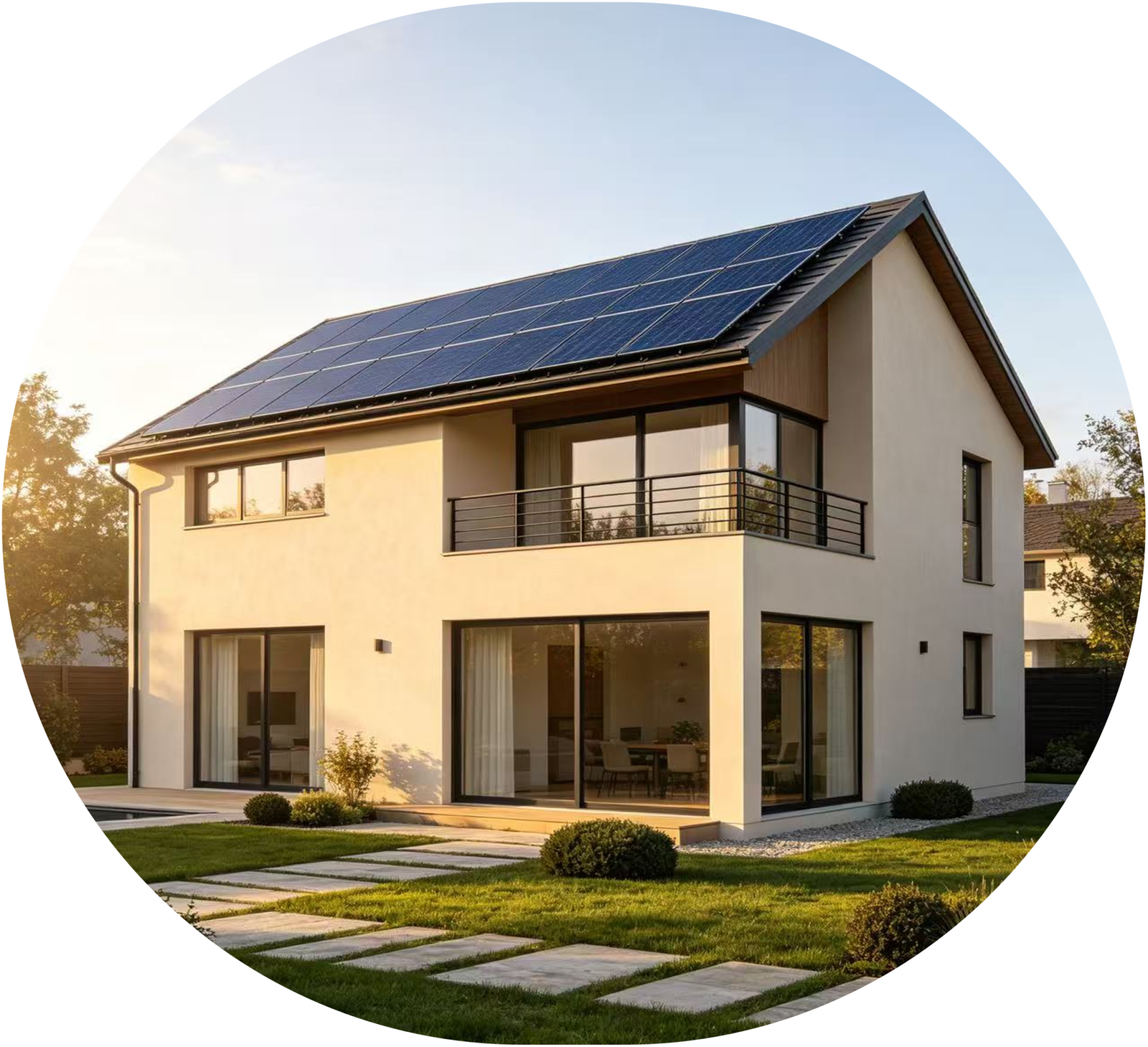
Store surplus solar energy during the day and use it at night to make more of the power your home generates.
Backup Power
Keep selected essential circuits supplied during an outage when paired with a compatible backup inverter and transfer system.
Time-of-Use Energy Management
Charge during lower-tariff periods and use stored energy during peak-rate hours, where tariffs and system settings allow.
Off-Grid & Hybrid Living
Support cabins, remote homes and hybrid solar systems with energy storage sized for daily loads and available generation.
LET’S TALK ENERGY STORAGE
Find the right ESS battery for your project.
Tell us the capacity you need, your installation scenario and the quantity required. Contact our sales team directly for product details and pricing.
WhatsApp: +86 178 1770 3765 | Email: a1961712528@gmail.com
ESS LiFePO4 Energy Storage • Product specifications are based on the supplied sheets and should be confirmed before ordering.
SELECTION & COMPATIBILITY
Home Battery Voltage, Capacity & Inverter Compatibility
The listed home storage batteries use a 51.2V LiFePO4 system and include 5.12, 10.5 and 16kWh model options. Select capacity from the loads and backup duration you need, then verify the inverter, charging limits and BMS communication against the exact battery model.
| Check | How to select |
|---|---|
| Energy requirement | List the appliances to back up, their watts and the required hours. Estimate energy as total load in kW × backup hours; then compare with the model’s documented usable energy and reserve requirements. |
| Battery voltage & inverter | Confirm the inverter supports the battery’s 51.2V nominal system and operating voltage range. Check charge/discharge current limits and approved operating configuration. |
| Communication & parallel use | Verify the exact BMS protocol, wiring and inverter firmware. Parallel expansion is configuration-dependent; confirm the permitted battery count and cabling for the selected model. |
| Installation & charging | Check location, temperature, clearances, cable sizing and protection requirements. Set charger parameters only to the battery manufacturer’s specified values. |
Compare before you choose
For example, a smaller capacity may suit essential loads for a shorter outage; a larger capacity can support more energy or longer backup when the inverter and installation support it. Compare the listed 5.12, 10.5 and 16kWh options by usable energy, continuous power, inverter compatibility and expansion limits—not capacity alone.
For a model-specific recommendation, send the equipment or system model, existing battery label, required voltage, capacity or load, dimensions, charger details and operating schedule. Final fit and settings must be confirmed against the selected model data.
CONTINUE EXPLORING
Related products & charging options
Compare the application and battery technology. Confirm the charging profile and compatibility before selection.
Compare stationary battery technologies.
Explore 2V and 12V stationary battery models.
Portable energy for outdoor use and backup.
Product Selection FAQs
Start with daily energy use and the appliances that must remain powered during an outage. Compare the model capacity with your backup duration, inverter power and expansion plan; confirm usable energy and system limits in the model data.
Check the inverter’s battery voltage range, charging settings, maximum current and supported BMS communication protocol. Share the exact inverter make and model so compatibility can be confirmed for the selected battery.
Under supported configurations, up to 15 units can be connected in parallel. Before designing a parallel system, please verify the specific battery model, inverter, wiring, and operating conditions.