Lead Acid Forklift Battery Packs & Cells
Choose a lead acid forklift battery by matching the complete truck specification. First, compare voltage and capacity with the installed pack. Then confirm tray dimensions, required weight, connector and charger details. The tubular-plate GB, VBS and PZS cell series below support configurations for forklifts, pallet trucks, stackers and tow tractors.
Cell Engineering & Serviceability
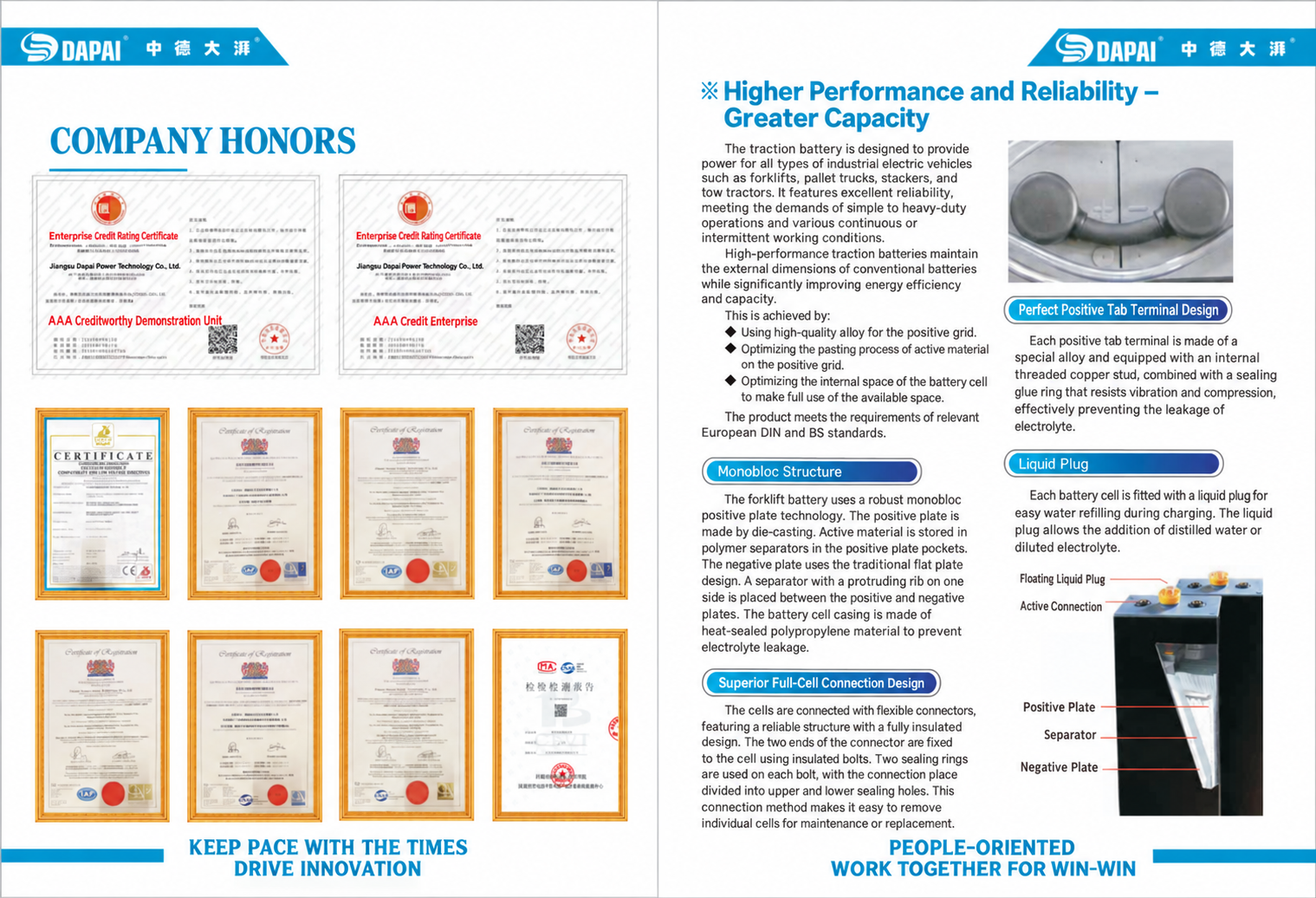
A lead acid forklift battery depends on cell construction, electrical connections and service access. This section summarizes design details from the DAPAI traction battery catalogue, with the original specifications available below.
Positive Grid & Active Material
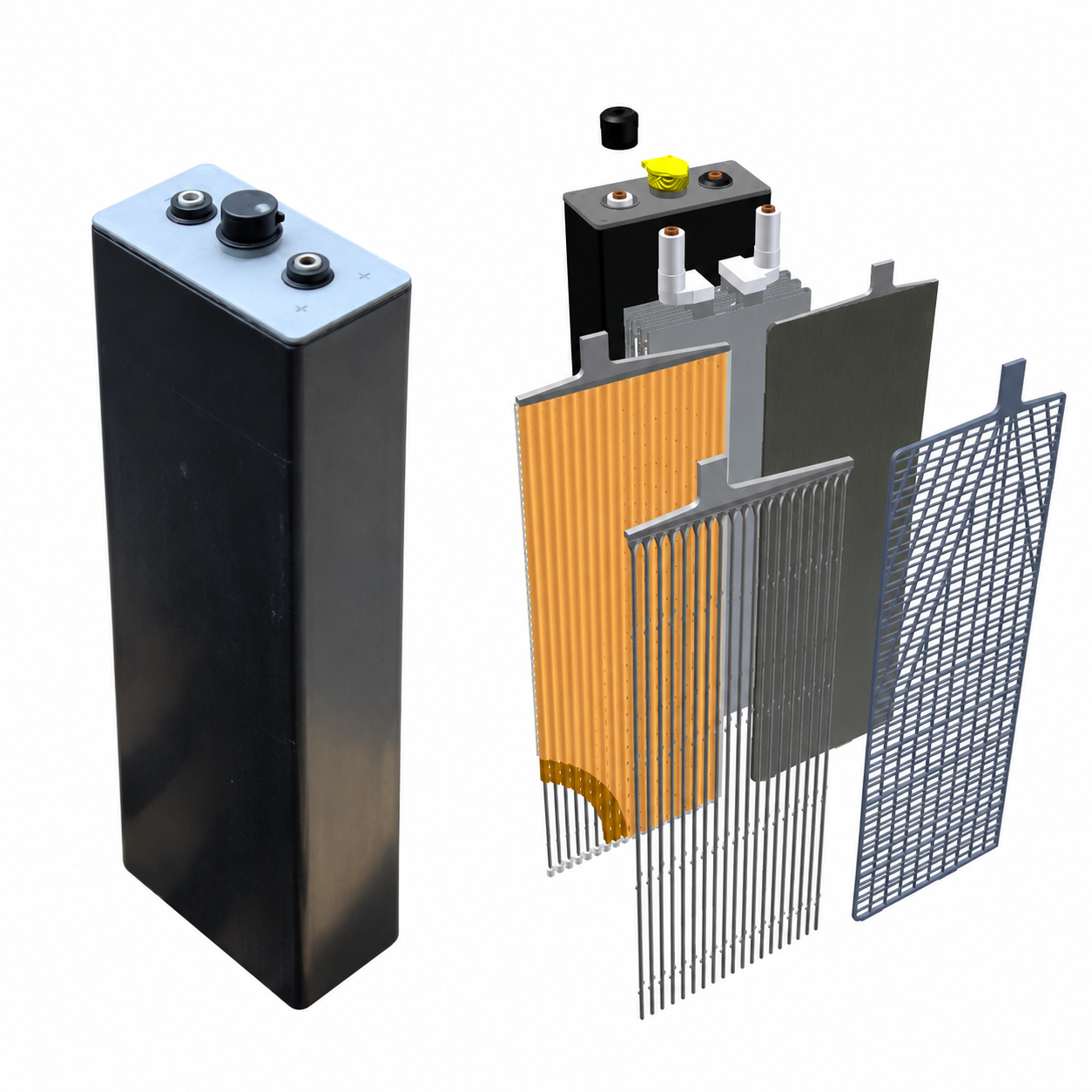
Quality alloy positive grids, improved active-material filling and optimized positive plate dimensions make effective use of the available cell space.
Tubular Cell Construction
Tubular positive plates are paired with flat negative plates and microporous separators. Impact-resistant polypropylene containers and heat-sealed lids form the cell enclosure.
Terminal Post Sealing
Alloy terminals incorporate internally threaded copper inserts. Compressed sealing rings around the posts help prevent electrolyte leakage.
Insulated Flexible Connectors
Insulated connector ends and a protected conductor form flexible inter-cell connections. Bolted fastening simplifies cell removal, maintenance and replacement.
Vent Plugs & Electrolyte Checks
Cell vent plugs allow charging gases to escape and provide access for water replenishment and electrolyte specific-gravity measurement.
Centralized Watering Option
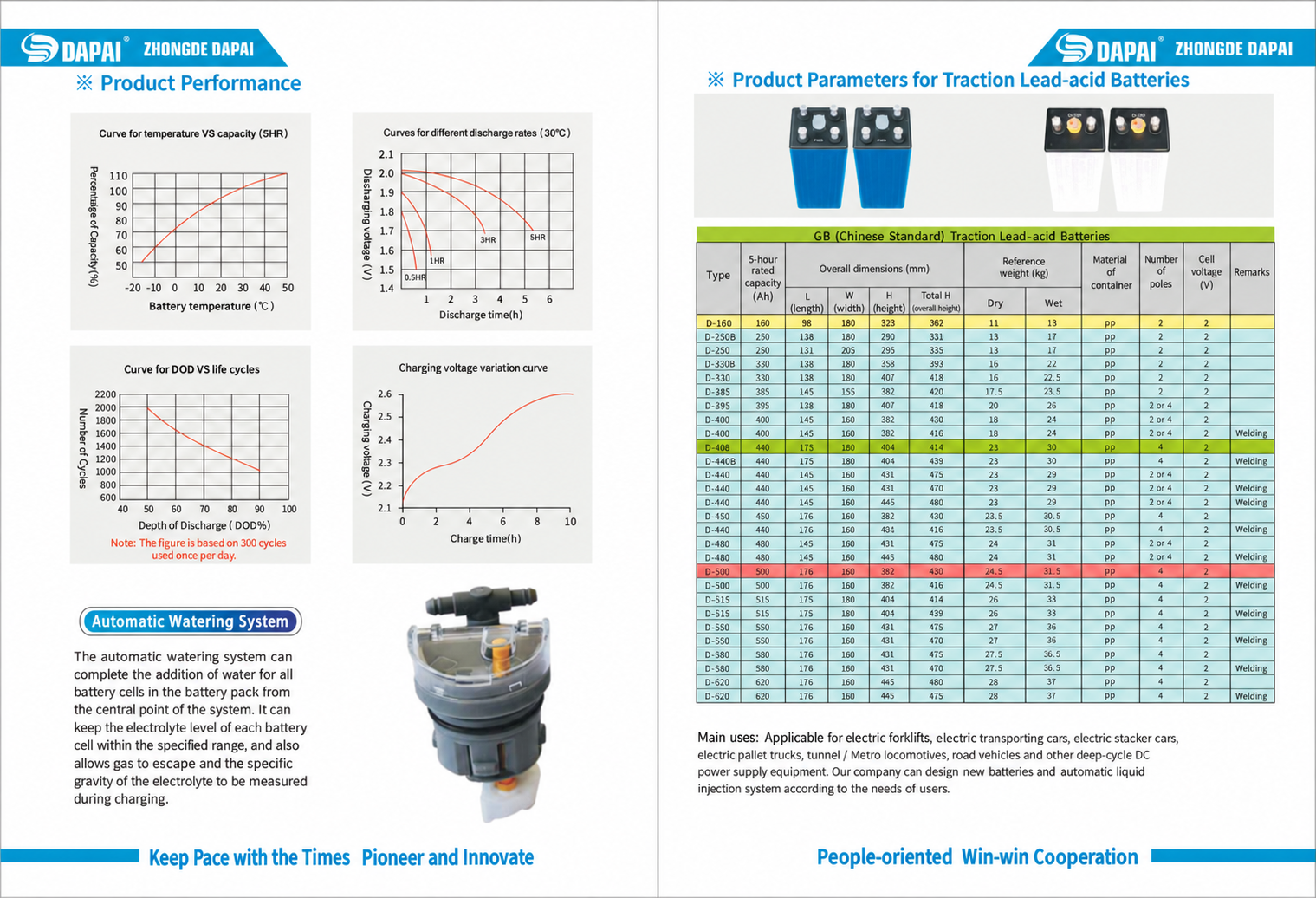
Water can be supplied from a central point to the connected cells. Watering valves control the electrolyte level to simplify routine servicing.
Performance Characteristics
The catalogue includes reference curves for temperature versus capacity at the 5-hour rate, discharge voltage at different discharge rates at 30°C, depth of discharge versus cycle life, and charging voltage versus time.
Temperature & Capacity
Available capacity changes with battery temperature. Use the catalogue curve as a reference when assessing the operating environment.
Discharge Rate & Voltage
The discharge curves show how terminal voltage changes at different discharge rates and durations.
Depth of Discharge & Cycle Life
The reference curve illustrates the relationship between depth of discharge and cycle life; it is not a universal lifespan guarantee.
Reference curves apply to the conditions shown in the source. Final performance depends on the selected model, charging, maintenance and operating conditions.
GB / VBS / PZS Cell Specifications
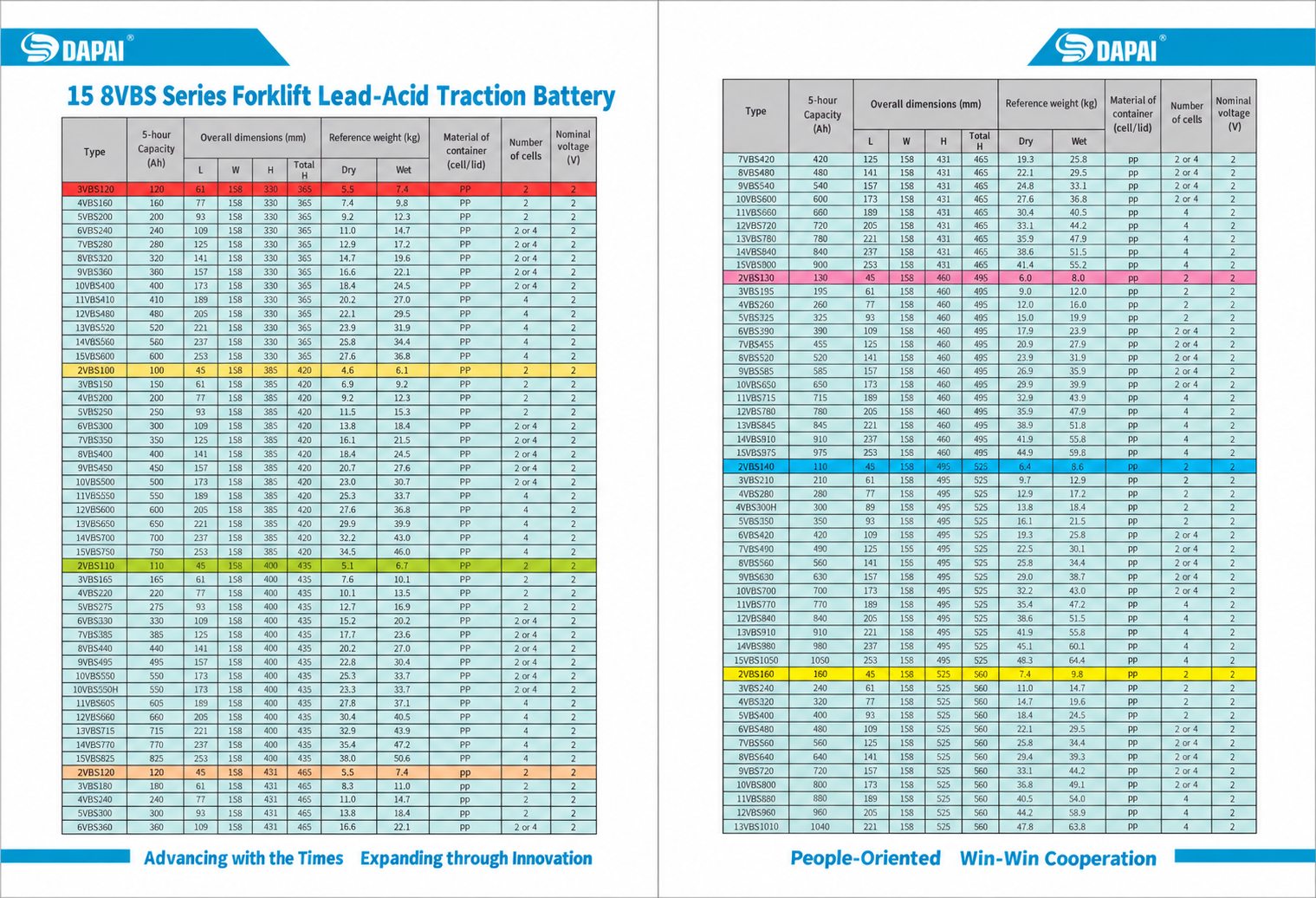
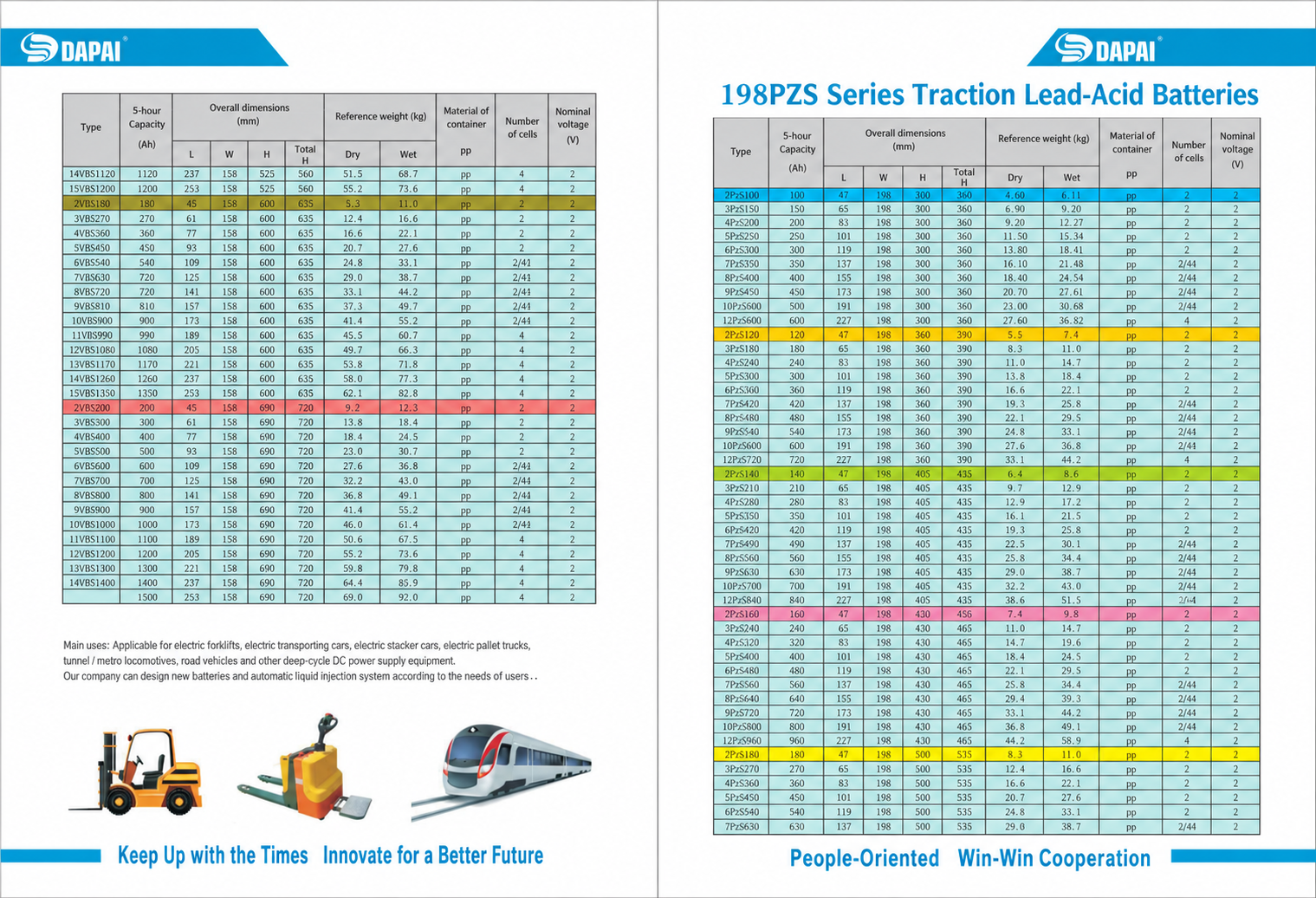
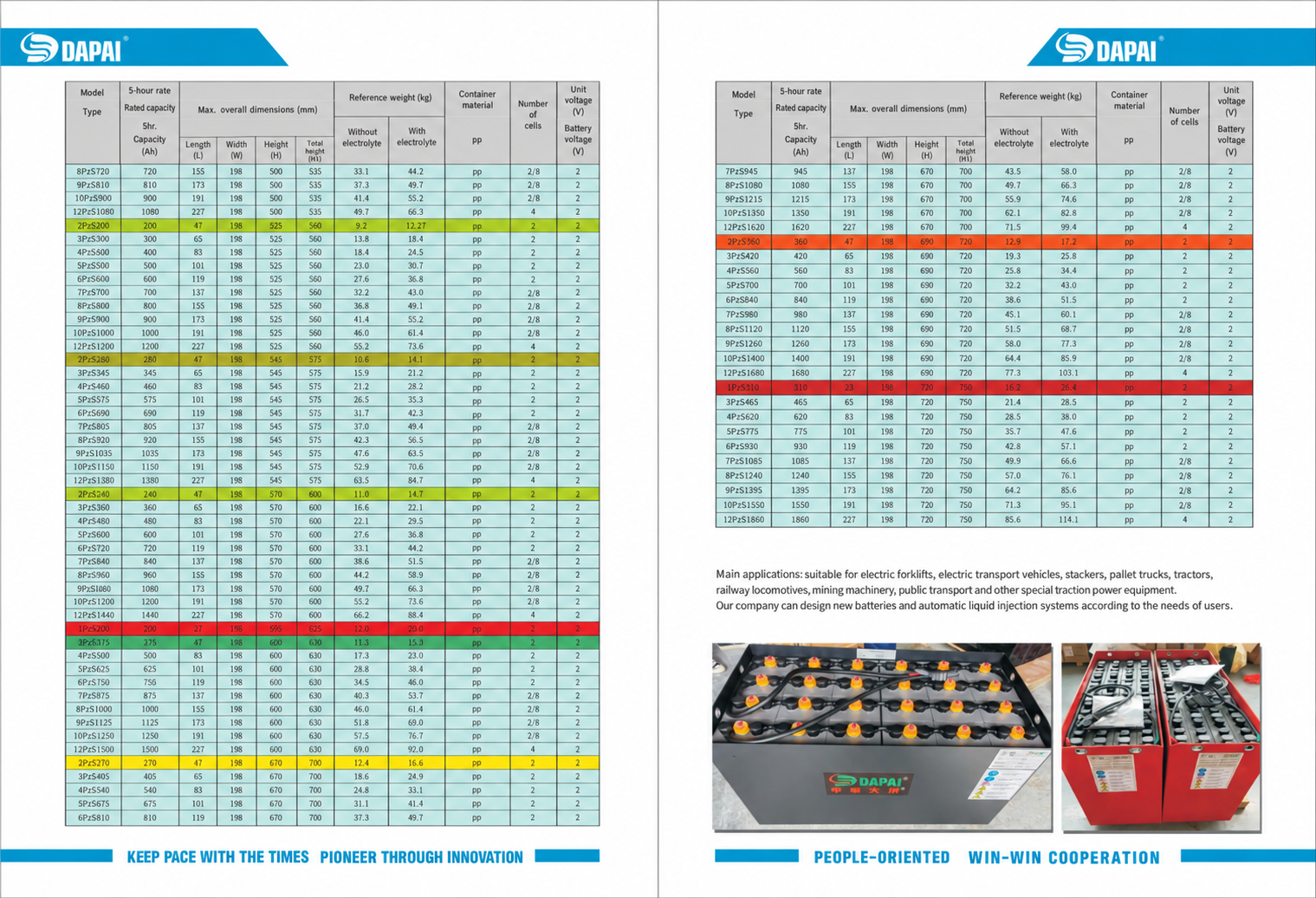
Select cells using the 5-hour rated capacity, maximum dimensions, total height, reference dry/wet weight, container material, terminal arrangement and nominal cell voltage. The original catalogue tables are retained below for accurate reference.
GB Series
GB traction cell specifications, including D-series models, dimensions, capacity and reference weight.
158 mm VBS Series
VBS traction cells with the 158 mm width shown in the catalogue. Multiple lengths, heights and capacities support different tray layouts.
198 mm PZS Series
PZS traction cells with the 198 mm width shown in the catalogue. Select the cell configuration to suit vehicle and installation requirements.
Cell tables are not complete battery-pack dimensions. Confirm tray size, cell arrangement, connector position and assembled pack weight before ordering. Reference weight tolerances and dimensions follow the original tables.
Lead Acid Forklift Battery Applications
Electric Forklifts
Traction power for material handling and loading operations.
Pallet Trucks & Stackers
Battery configurations for warehouse transport and stacking equipment.
Tow Tractors & Industrial Equipment
Motive-power applications and other deep-cycle DC-powered equipment.
Lead Acid Forklift Battery Maintenance & Charging
Routine maintenance includes checking electrolyte levels, replenishing water as specified, inspecting connections and using a charger matched to the battery. Follow the instructions for the selected battery model.
Use our forklift battery maintenance guide for inspection and service planning. When matching charging equipment, review the lead-acid forklift charger specifications and the forklift charger selection checklist.
Centralized watering can be specified to simplify servicing. Charging and equalization settings should follow the applicable battery and charger instructions.
Company Credentials & Cooperation
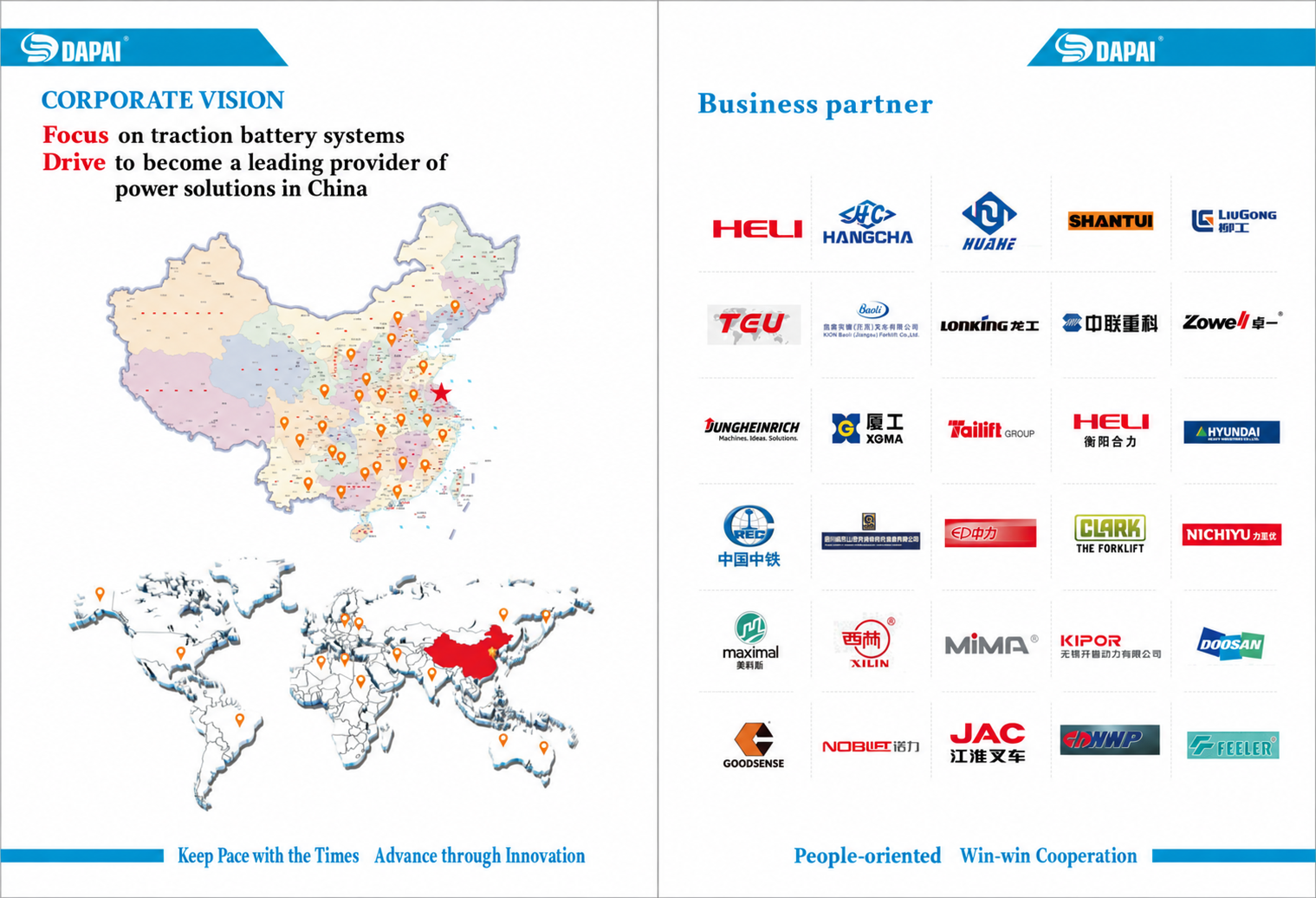
The supplied catalogue contains company credit certificates, certification and test-report reproductions, a corporate vision statement and a business-partner overview. Original pages are available below for reference.
Certificate reproductions and partner logos are presented as shown in the supplied catalogue. Current certificate validity, applicable product scope and cooperation details can be confirmed on request.
Find the Right Lead Acid Forklift Battery
For a lead acid forklift battery enquiry, send the vehicle model, installed battery label, required voltage and capacity, tray measurements, connector photographs and charger details. Finally, confirm the selected configuration with your equipment requirements before ordering.
For workplace charging practices, consult OSHA electric forklift battery guidance, the equipment manuals and applicable local requirements.
SELECTION & COMPATIBILITY
Forklift Battery Fitment & Voltage/Capacity Guide
Start with the forklift maker’s battery specification and the existing battery nameplate. Voltage must match the truck; capacity must cover the planned shift under the stated discharge conditions. Confirm the completed pack, not just the cell, fits the compartment and meets the truck’s battery weight requirement.
| Check | How to select |
|---|---|
| Truck voltage | Use the rated battery voltage shown on the truck data plate or original battery. Keep the specified cell count and system voltage; do not select voltage by preference. |
| Capacity (Ah) | Use the existing Ah rating and shift workload as the starting point. Consider load, operating hours, breaks, multi-shift use and the catalogue discharge rate. Compare ratings only at the same hour rate. |
| Dimensions & weight | Check the complete battery length, width, height, lifting points and installed weight against the tray and truck limits. Cell dimensions alone do not confirm pack fit. |
| Connections & charger | Confirm terminal layout, connector, polarity and charger profile. For flooded traction batteries, follow the specified water, ventilation and charging procedures. |
Compare before you choose
Flooded lead-acid traction cells require the specified electrolyte checks and water replenishment. A LiFePO4 replacement may reduce routine watering, but it must be reviewed for voltage, tray fit, connector, charger profile, battery weight/counterweight and truck communication. See the LiFePO4 forklift battery systems page.
For a model-specific recommendation, send the equipment or system model, existing battery label, required voltage, capacity or load, dimensions, charger details and operating schedule. Final fit and settings must be confirmed against the selected model data.

CONTINUE EXPLORING
Related products & charging options
Compare the application and battery technology. Confirm the charging profile and compatibility before selection.
Lithium traction systems with battery management.
Choose a charger for the battery voltage and capacity.
Compare stationary battery technologies.