Portable power stations supply compatible devices on camping trips, road journeys and outdoor work. First, compare battery capacity and rated output with your equipment. Then check the available ports, charging methods and expected runtime before choosing a model. For a wider range of energy storage products, browse our product center or contact DAPAI with your equipment list.
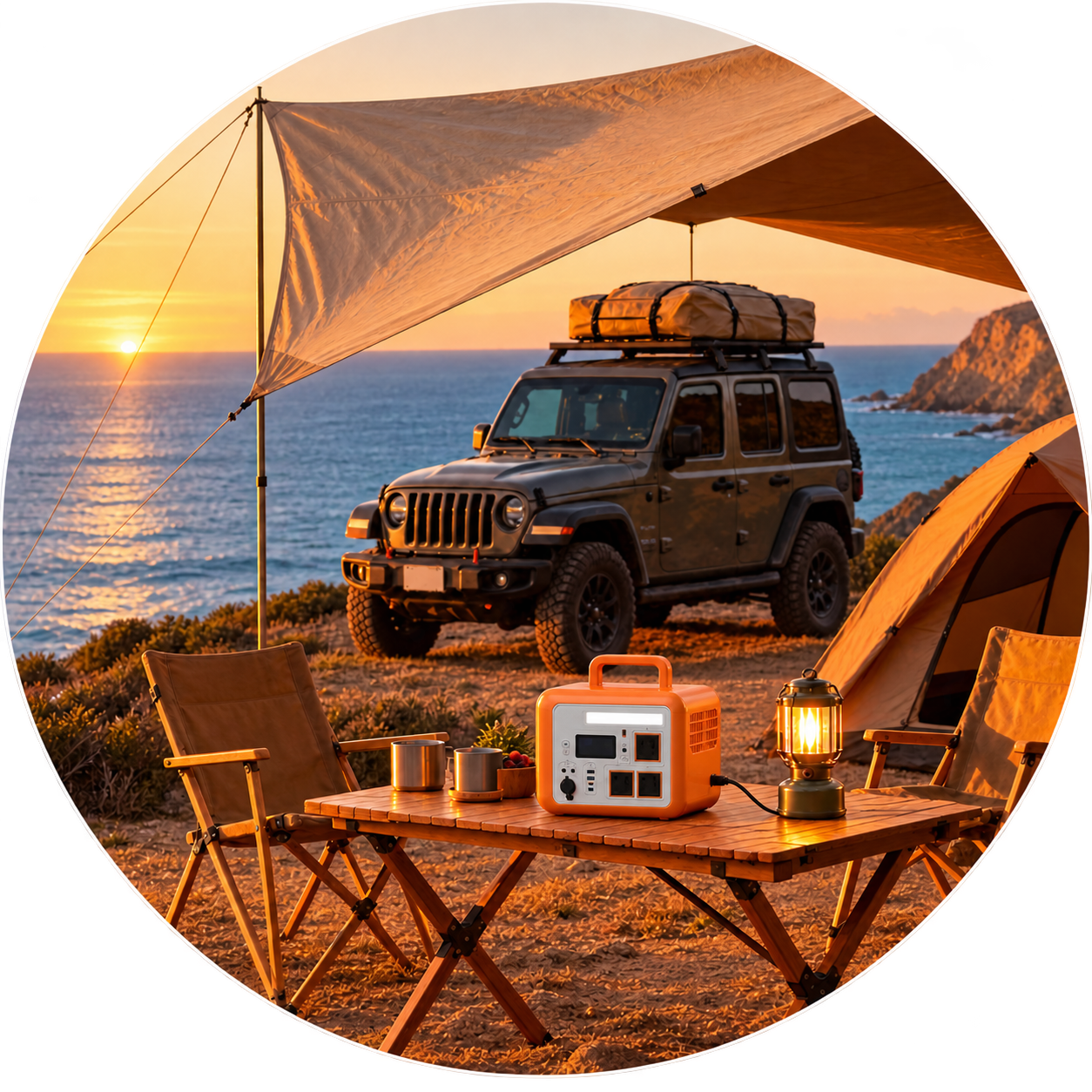
Camping & road trips Supply compatible lighting, devices and travel equipment away from mains power.
Outdoor work Run compatible tools and electronics within the selected unit’s continuous and surge limits.
Essential backup Plan power for selected appliances based on their wattage and required runtime.
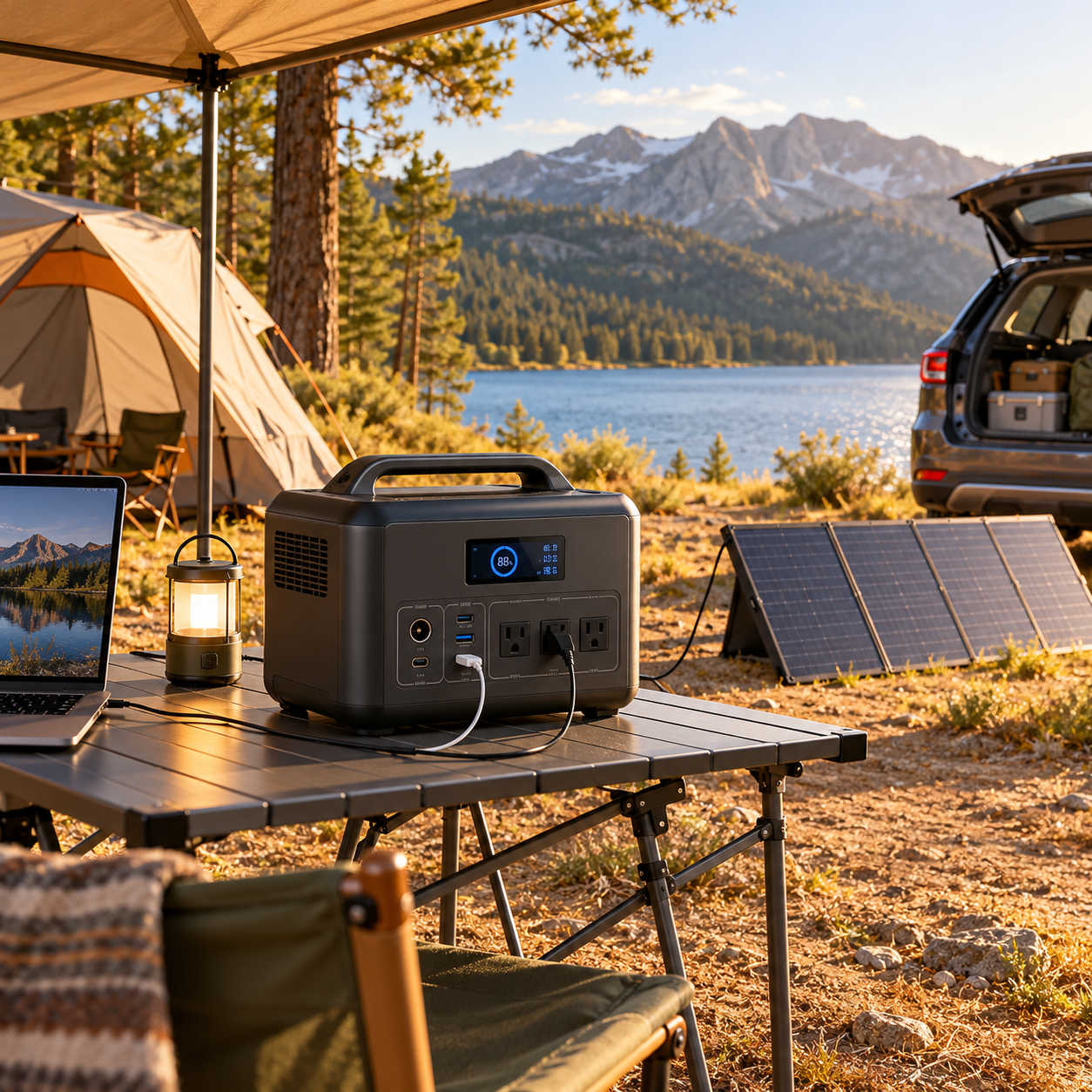
Solar recharging Use compatible panels within each model’s stated voltage, current and power limits.
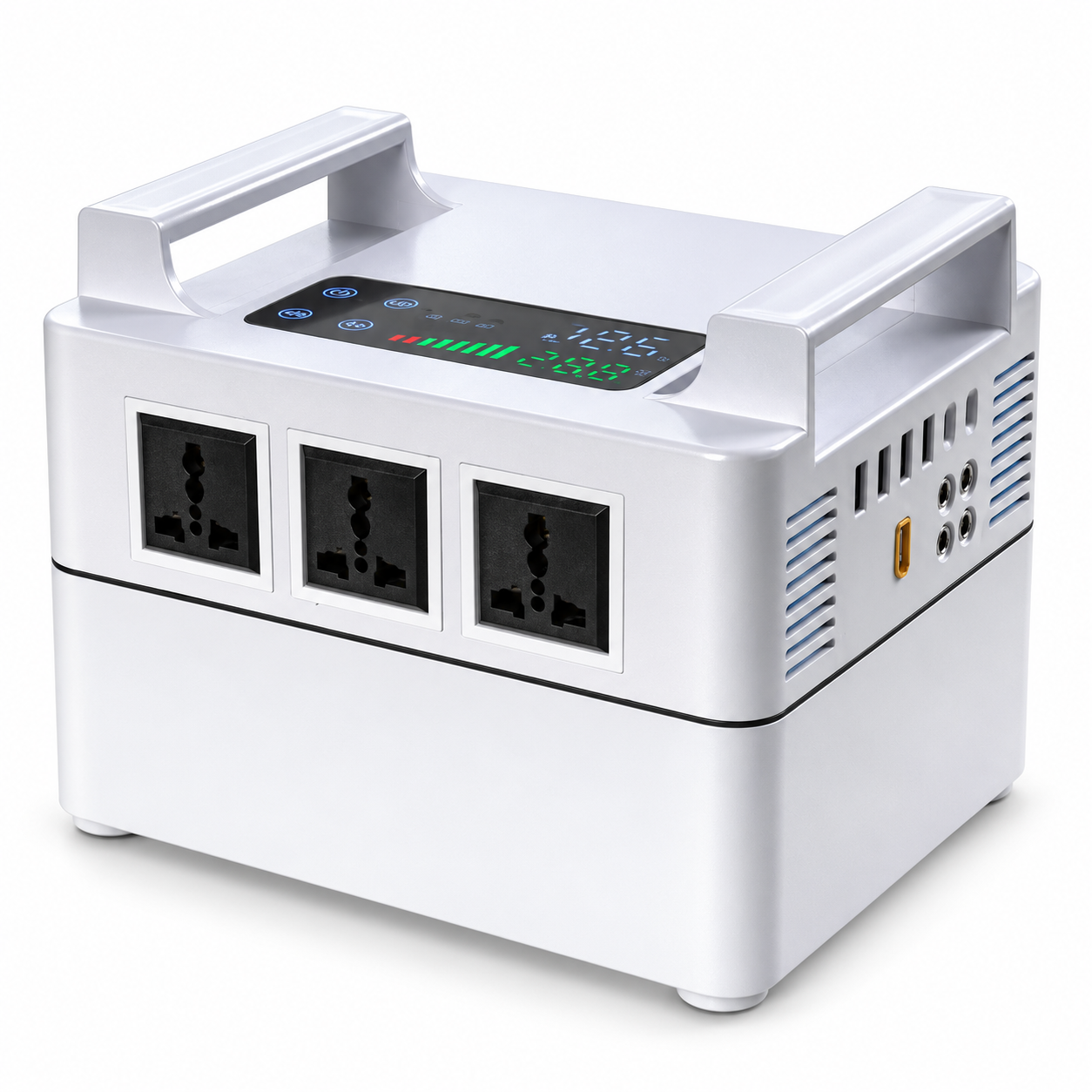
DP-600W portable power station. Available in black and white.
DP-600W
Compact Power for Everyday Adventures
A 576Wh LiFePO4 portable power station with 600W pure sine wave AC output. Designed for compatible camping devices, personal electronics and selected essential loads, with adapter and solar charging options.
Battery capacity
19.2V / 30Ah / 576Wh
AC output
600W total; 3 AC sockets; pure sine wave; 220V or 110V versions; 50/60Hz
Adapter charging
XT60; 24V / 5A charger
Solar input
XT60; 22–36V / 20A as listed; 200W maximum
USB-A outputs
4 ports; QC3.0; up to 18W; 12V / 1.5A
USB-C outputs
2 ports; PD / QC3.0; up to 18W; 12V / 1.5A
DC outputs
4 ports; 12V / 10A maximum
Lighting
4W LED; two brightness levels and SOS flashing
Wireless charging
15W
Battery cells
LiFePO4; 32140 cylindrical cells; 3.2V / 15Ah
Dimensions
242 × 194 × 194mm
Housing
PC + V0 flame-retardant material
Colors
Black or white
Product weight
5.8kg
Packaging dimensions
335 × 285 × 280mm
Solar input values are reproduced from the supplied sheet. Confirm the permitted voltage, current and panel configuration before connection.
Product image for comparison. Ask DAPAI to verify the selected unit’s configuration and final appearance before ordering.
DP-1200W
Battery capacity
19.2V / 60Ah / 1,152Wh
AC output
1,200W; pure sine wave; 220V or 110V version; 50/60Hz
Charging inputs
XT60: 21.9V / 20A; DC5521: 12–24V / 1–5A
DC outputs
12V / 10A; car socket and 2 DC ports; 120W total
USB outputs
2 USB-A QC3.0; USB-C1 up to 30W; USB-C2 up to 100W
Other functions
15W wireless charging; 1W LED with SOS
Cell type
LiFePO4; 32140 / 15Ah / 3.2V cylindrical cells
Dimensions
280 × 245 × 250mm
Weight
11.7kg
Housing / colors
PC + V0 flame-retardant material; orange, black, silver, white or green
Packaging
355 × 320 × 360mm
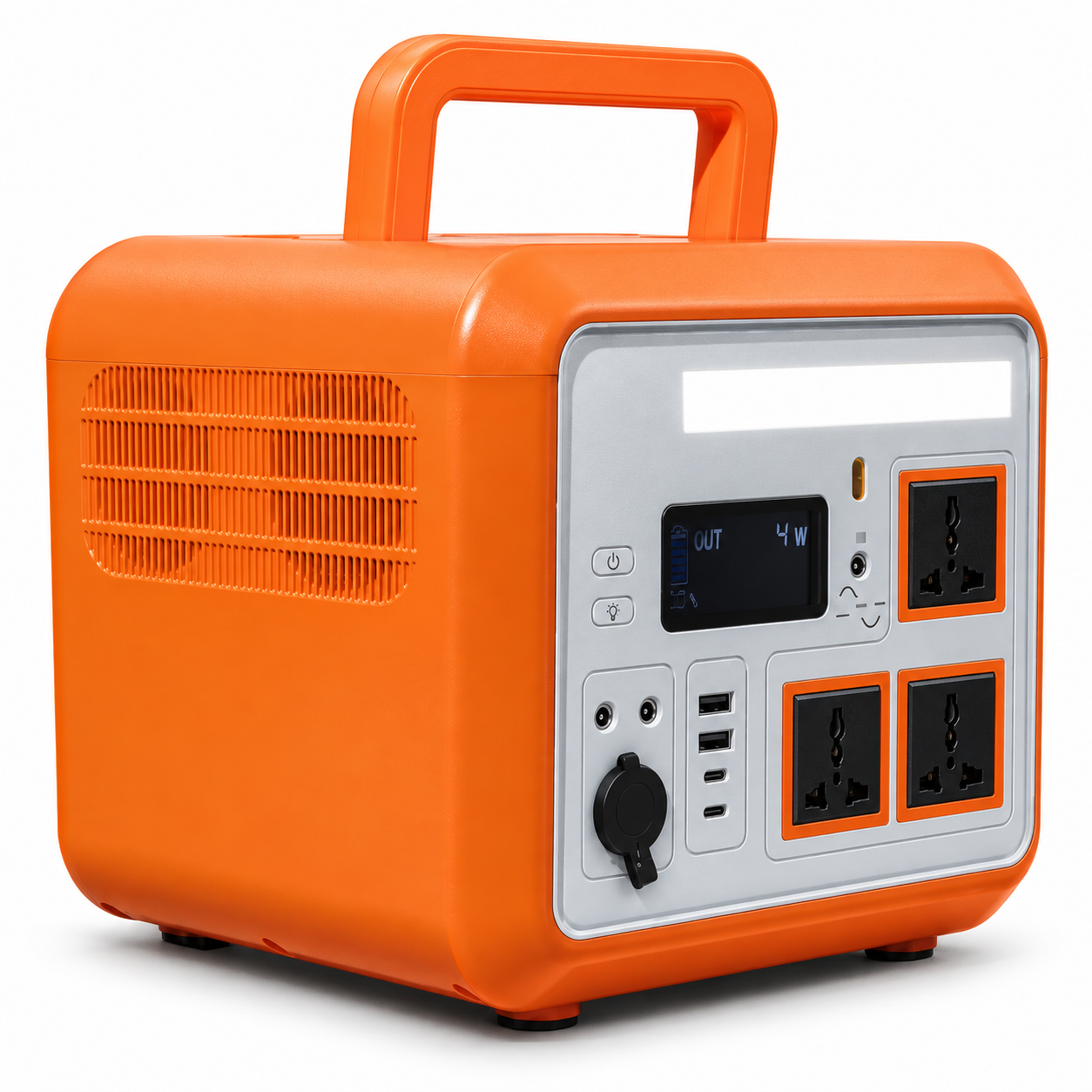
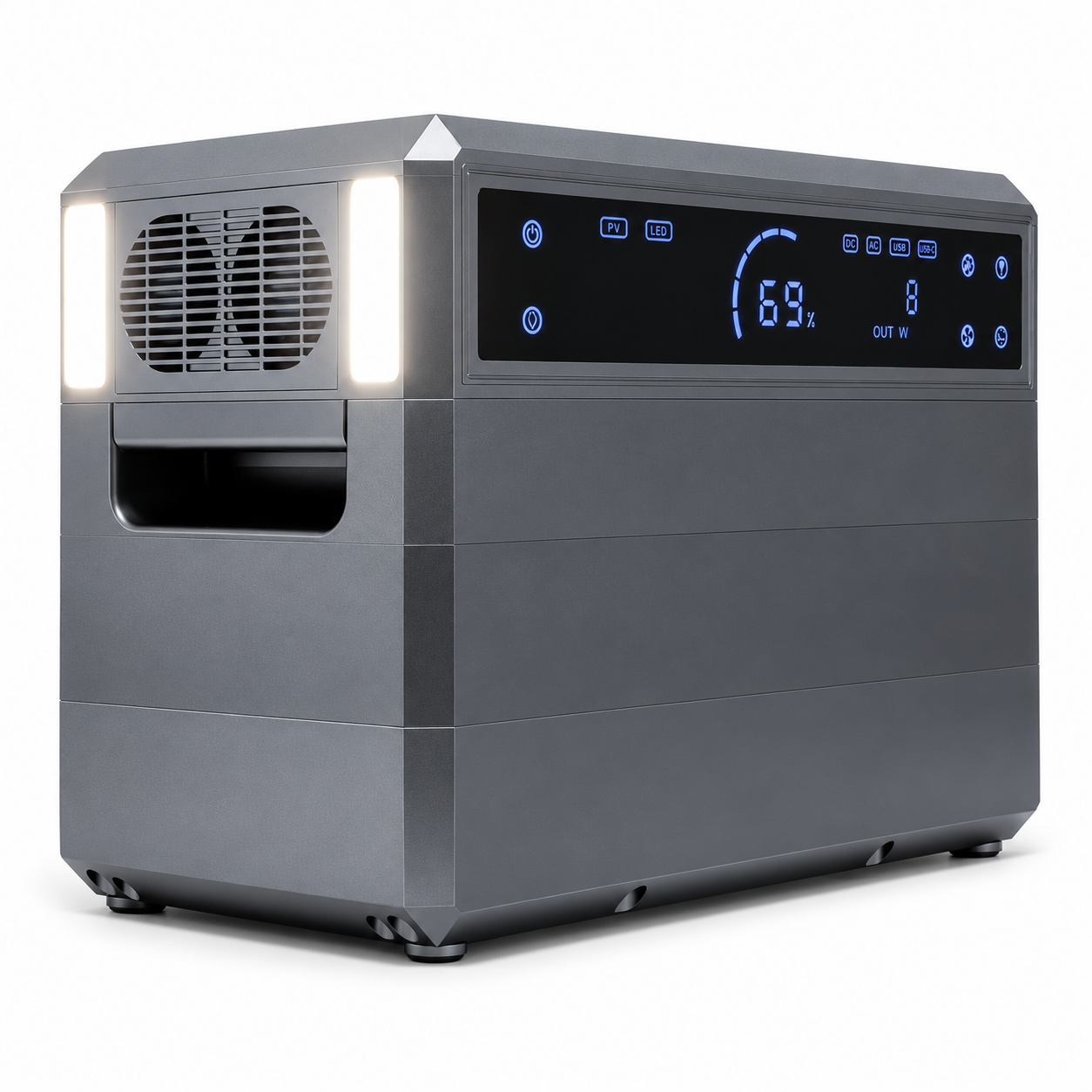
Illustration for model selection. Confirm the chosen enclosure, controls and final specification with DAPAI.
DP-2000W Touchscreen
Battery capacity
51.2V / 50Ah / 2,560Wh
AC output
2,000W pure sine wave; 220V ±5%; 2 AC sockets
Solar / DC input
DC5521: 12–90V / 10A, max 120W; XT60: 12–90V / 20A, max 800W; MPPT supported
AC charging
180–250V input; 1,000W rated charging power
USB-C outputs
USB-C1 up to 30W; USB-C2 up to 100W
USB-A outputs
USB-A1 up to 36W; USB-A2/3 up to 18W
Other outputs
12V / 10A DC, max 120W; 15W wireless charging
Lighting
4–8W LED with dimming and SOS
Cell type
LiFePO4; 40160 / 25Ah / 3.2V cylindrical cells
Dimensions / weight
460 × 250 × 335mm / 24.6kg
Housing / colors
PC + V0 flame-retardant material; black, white or gray
Packaging
560 × 350 × 430mm
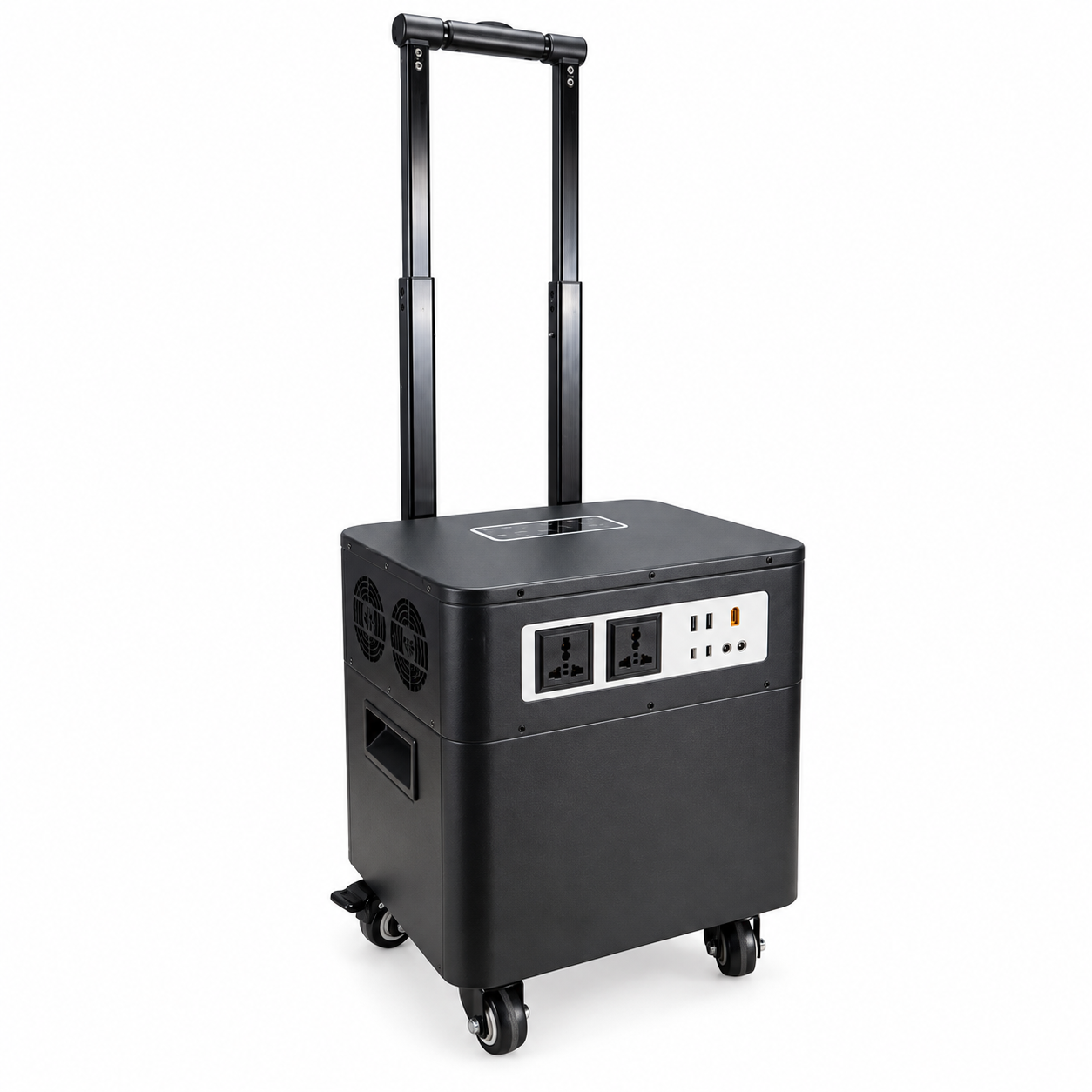
For the trolley-style unit, check dimensions, wheels and connector arrangement against the current model sheet.
P-300 Trolley Model
Battery capacity
25.6V / 75Ah / 1,920Wh
AC output — source listed
220V AC / 3,500W; 2 sockets; confirm rating before ordering
Charging inputs
XT60: 12–90V / 20A; max 512W adapter or solar input
USB outputs
USB-A1 up to 36W; USB-A2/3 up to 18W; USB-C1 up to 100W; USB-C2 up to 18W
Lighting
4–8W LED with dimming and SOS
Cell type
LiFePO4; 40160 / 25Ah / 3.2V cylindrical cells
Dimensions
340 × 260 × 325mm
Weight
26.6kg
Housing / color
Sheet metal / black
Mobility
Telescopic handle and caster wheels
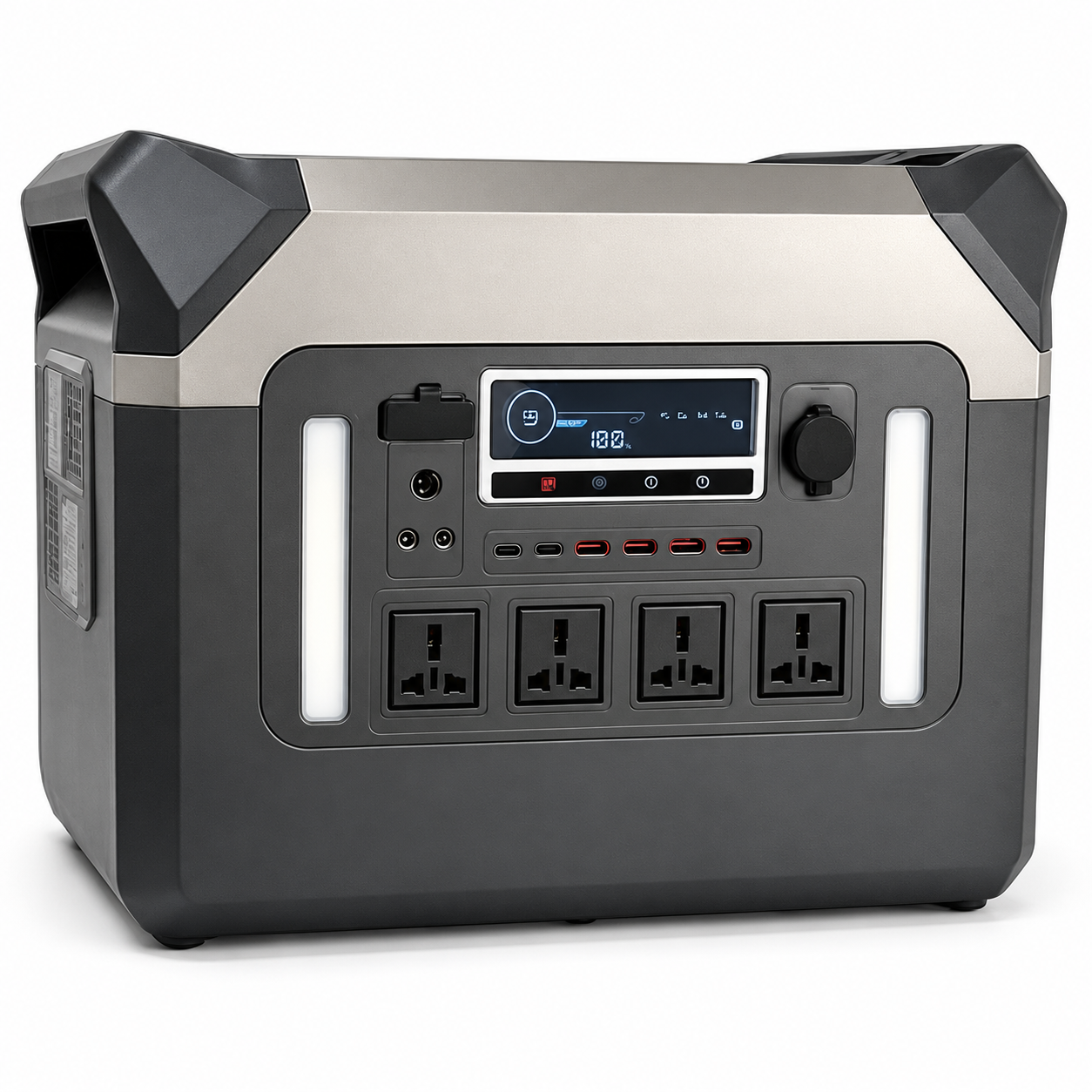
Appearance shown for reference. Compare the selected version’s output rating, ports and physical configuration before ordering.
DP-2000W — 2500W Listed Version
Rated power — source listed
2,500W; source model heading reads DP-2000W; confirm final model
Battery specification
25.6V / 100Ah / 2,560Wh
AC output
Pure sine wave; 220V or 110V; 4 AC sockets
Peak power
5,000W
USB outputs
4 USB ports + 1 USB-C; QC3.0 as listed
Car socket
12V / 8A DC
DC5521 outputs
2 ports; 12V / 8A DC
Charger
29.2V / 10A / 292W
Solar charging
36V; 400W max; XT90 connector
Battery chemistry
LiFePO4
Cycle life — source listed
More than 3,000 cycles; test conditions not provided
Find Your Portable Power Solution
Tell us your appliance wattage, target runtime, destination voltage and order quantity.
Specifications follow the supplied product sheets. Confirm model names, output ratings and regional compatibility before ordering.
Accordion Item 1
Accordion Item 2
SELECTION & COMPATIBILITY
Portable Power Stations: Capacity & Device Compatibility
When comparing portable power stations, start with the devices, output type and runtime you need. Then match both continuous and startup power, and confirm the model’s AC, USB or DC ports and its permitted charging inputs.
Check
How to select
Output voltage & port
Check appliance voltage, AC frequency or DC connector against the selected output. Confirm plug type and port availability.
Running & startup watts
Add the running wattage of devices used at the same time. Motors and compressors may need extra startup power; keep both running and surge demand within the model ratings.
Capacity & runtime
Estimate energy as combined average load in watts × hours ÷ 1,000. Compare with the model’s capacity, allowing for conversion losses and reserve; runtime varies with load and conditions.
Charging input
For wall, vehicle or solar charging, check the model’s allowed input voltage, current, power and connector. Do not exceed the stated input limits.
Compare Portable Power Stations Before You Choose
Compare models by usable capacity, continuous output, surge rating, port mix and recharge inputs. The highest capacity is not always the best fit if an appliance’s startup demand or required connector exceeds the output specification.
For a model-specific recommendation, send the equipment or system model, existing battery label, required voltage, capacity or load, dimensions, charger details and operating schedule. Final fit and settings must be confirmed against the selected model data.
CONTINUE EXPLORING
Related products & charging options
Compare the application and battery technology. Confirm the charging profile and compatibility before selection.
Add the wattage of the devices you plan to run and compare the total with the station’s continuous output rating. Runtime depends on battery capacity, average load and conversion losses; share your device list and target hours to check a suitable model.
Match the appliance voltage, AC frequency or DC connection to the model’s output. Check both running and startup power against the station’s continuous and surge ratings before ordering.
Selected models support solar charging. Confirm the model’s allowed input voltage, current, maximum power and connector, then use a panel configuration within those limits.