
HFSW SERIES · LITHIUM FORKLIFT BATTERY CHARGERS
Lithium forklift battery charger specifications and safety guidance are based on the supplied HFSW user manual. Confirm final details with the equipment manufacturer.
HFSW SERIES / INDUSTRIAL CHARGING SOLUTIONS
Industrial Lithium Battery Chargers
24V / 36V/48V / 72V/80V Series • 3–20 kW • LCD Touchscreen
ENGINEERED FOR RELIABLE CHARGING
HIGH-FREQUENCY EFFICIENCY
CAN / BMS INTEGRATION
INTUITIVE TOUCH DISPLAY
REAL HFSW CHARGERS · PRODUCT GALLERY
Original product photos and charging interface image extracted from the supplied HFSW user manual. Product appearance may vary by model.
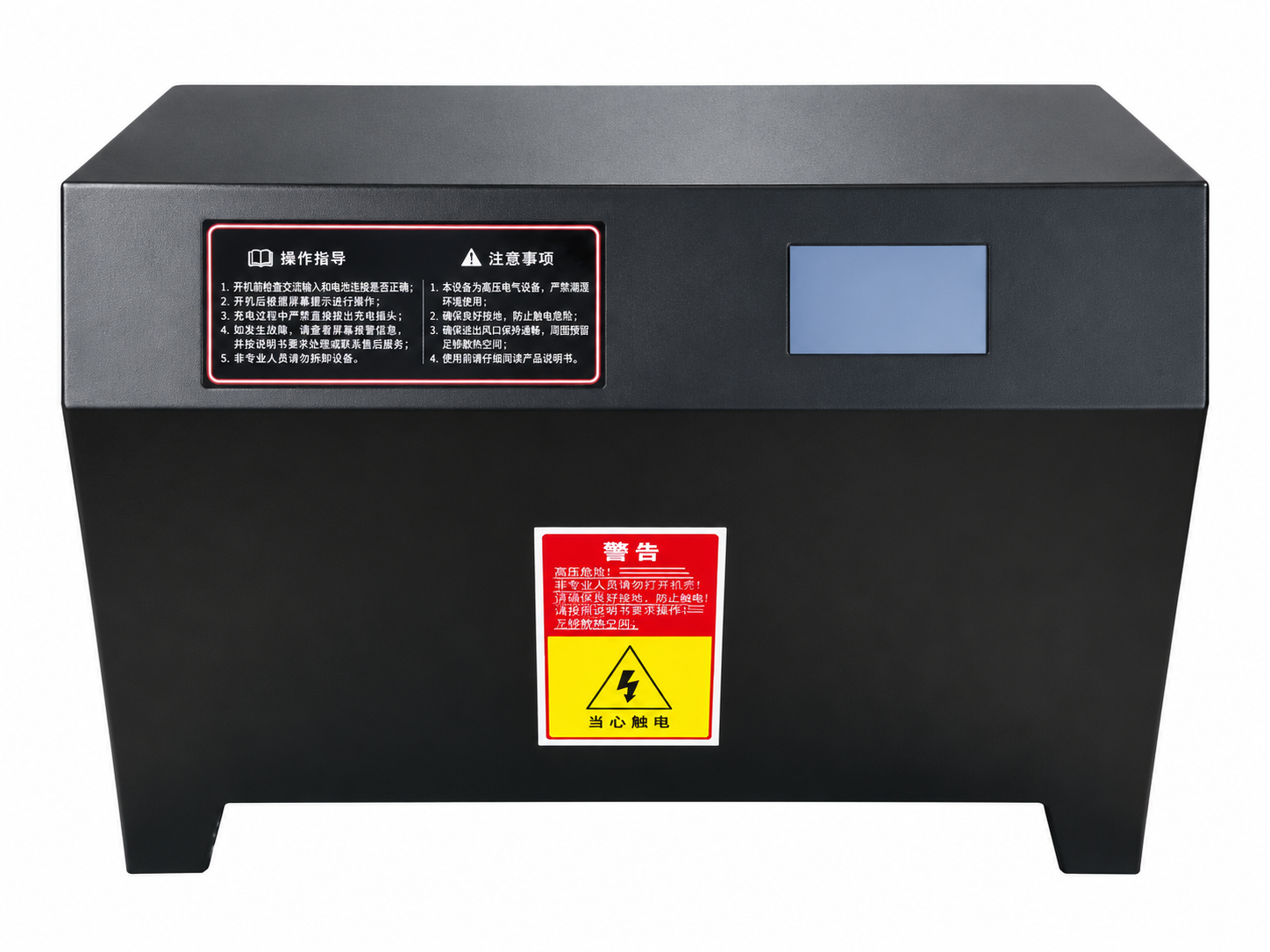
HFSW Charger — Black Cabinet
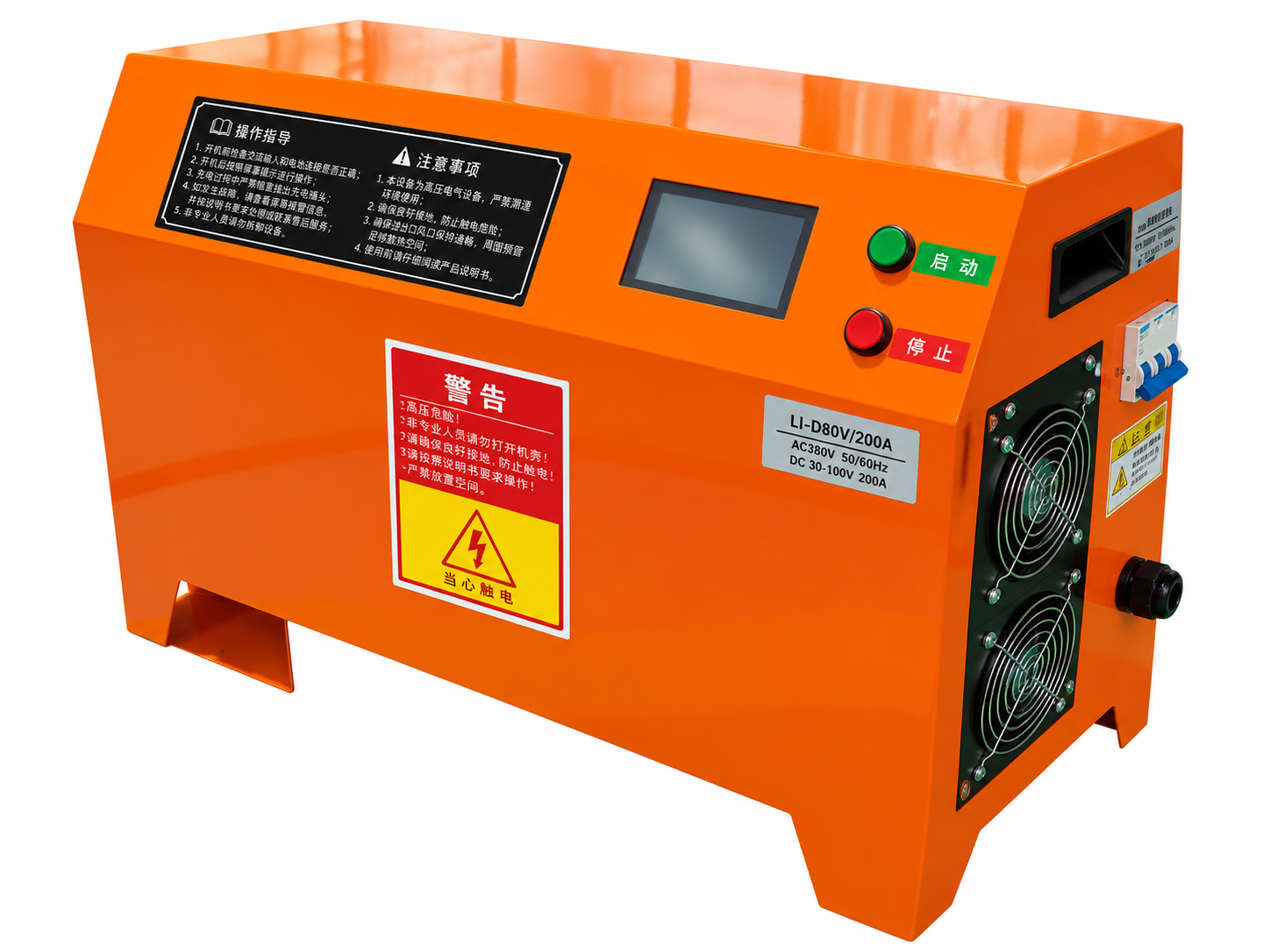
HFSW Charger — Orange Cabinet
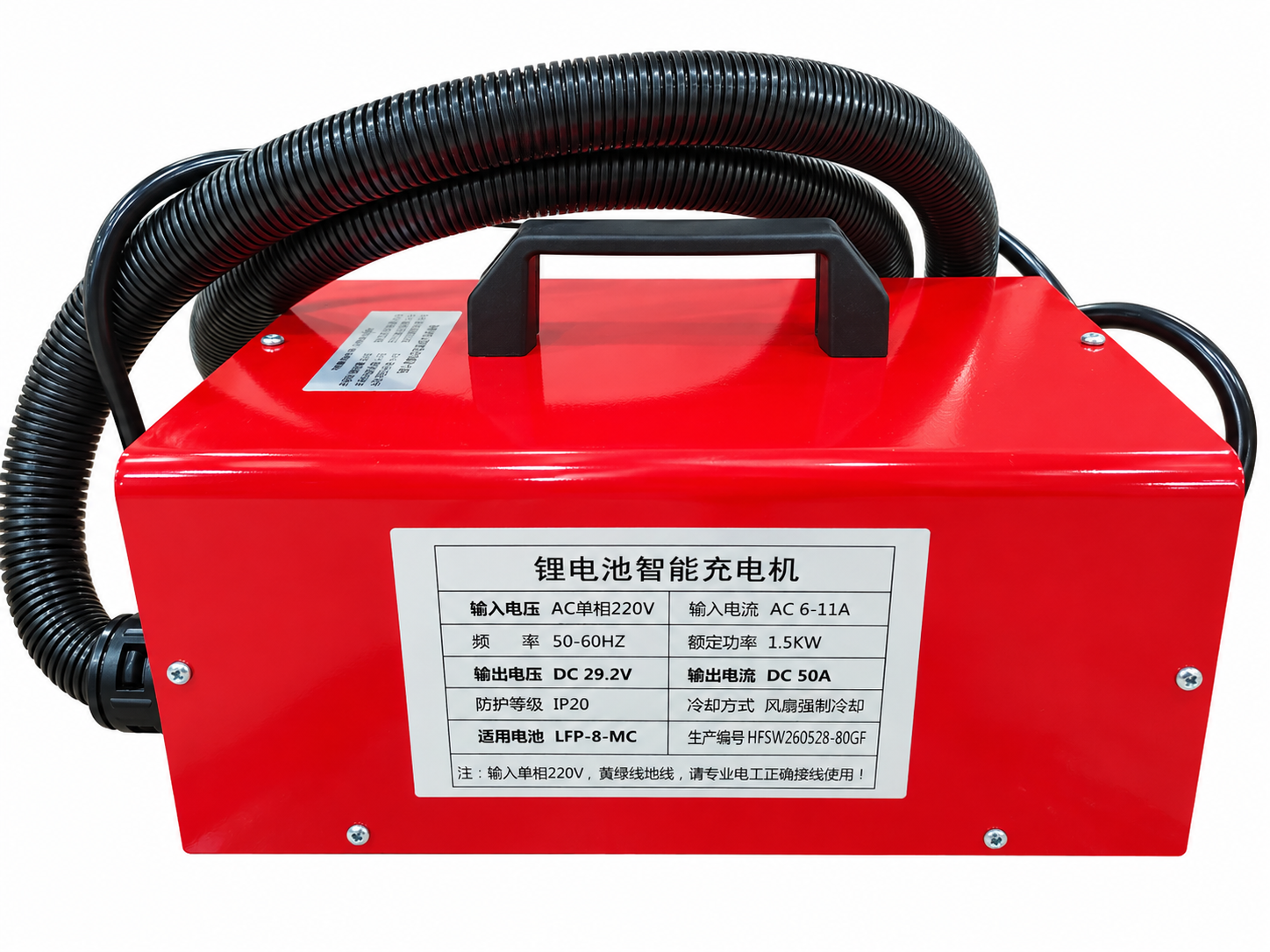
HFSW Charger - Portable
Full-color LCD Touch Display
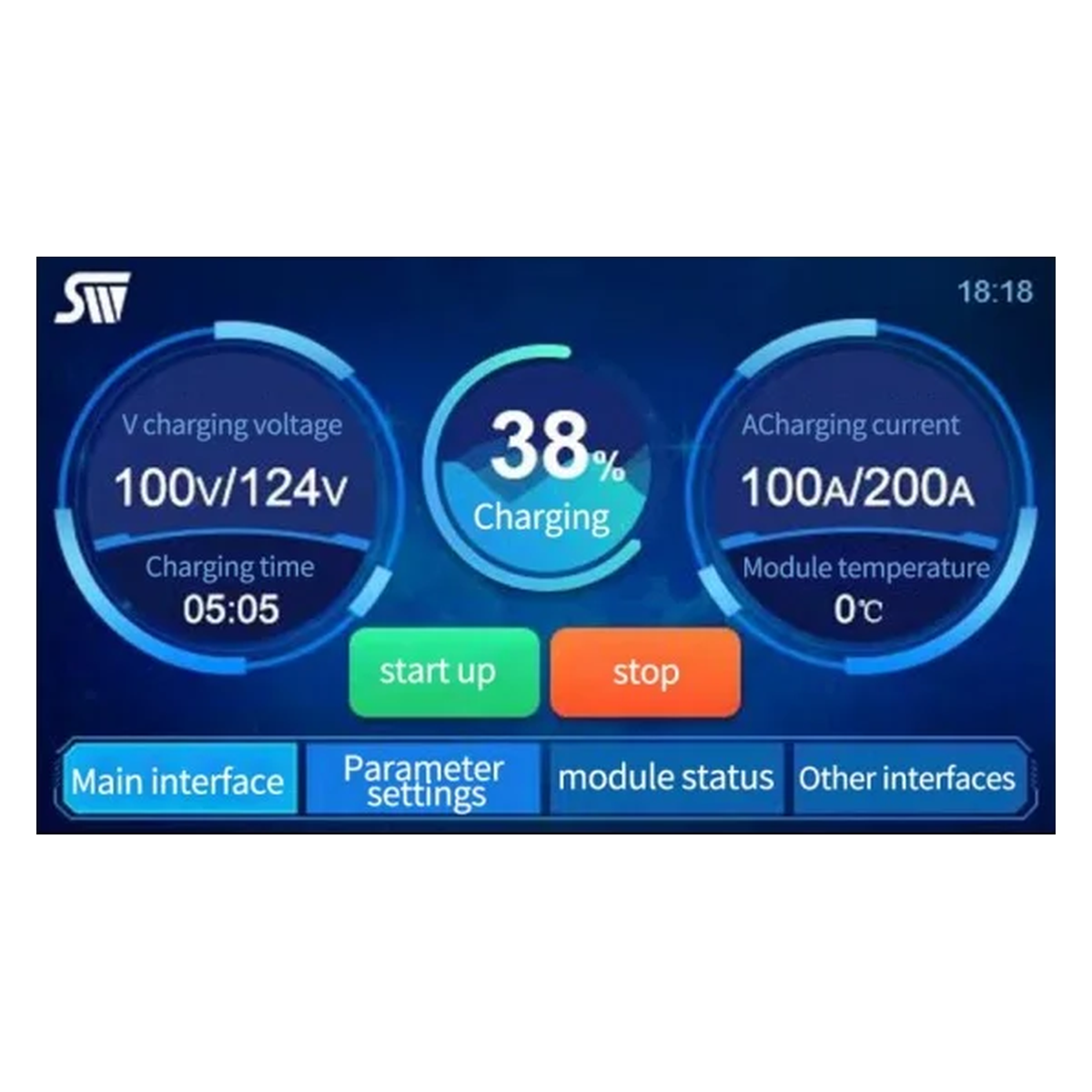
View charging voltage, current, time and fault information on the LCD interface.
CHARGER MODELS & SPECIFICATIONS
| Model | Rated Power | Output Current | Output Voltage | AC Input |
|---|---|---|---|---|
| LI-D24V/100A | 3 kW | 100 A | 18–34 V DC | 1-phase AC 220 V |
| LI-D48V/100A | 6 kW | 100 A | 20–60 V DC | 3-phase AC220/AC 380 V |
| LI-D48V/150A | 9 kW | 150 A | 20–60 V DC | 3-phaseAC220V/ AC 380 V |
| LI-D48V/200A | 12 kW | 200 A | 30–60 V DC | 3-phase AC220V/AC 380 V |
| LI-D80V/100A | 10 kW | 100 A | 30–100 V DC | 3-phaseAV220V/ AC 380 V |
| LI-D80V/200A | 20 kW | 200 A | 30–100 V DC | 3-phaseAC220V/ AC 380 V |
Specifications are reproduced from the supplied HFSW user manual. Verify electrical requirements and compatibility with the specific equipment nameplate and manufacturer before installation.
BUILT-IN PROTECTION. PRACTICAL MAINTENANCE.
ELECTRICAL & THERMAL PROTECTION
- Input overvoltage, undervoltage and phase-loss protection
- Output short-circuit, overcurrent, overvoltage and reverse-polarity protection
- Charging connector and module overtemperature protection
ROUTINE MAINTENANCE
- Keep the charging connector clean, dry and free of debris
- Check for unusual noise, vibration or odor
- Inspect cooling fans and cable insulation
- Clean the air-inlet dust filter approximately every 30 days, as conditions require
SAFETY & INSTALLATION ESSENTIALS
- Allow more than 50 cm clearance at charger air inlet and outlet
- Disconnect AC input and battery power before accessing the cabinet
- Provide reliable protective grounding; do not connect protective earth to neutral
- Never unplug the charging connector while charging; press STOP first
- In an emergency, disconnect the charger input power immediately
Operating conditions stated in the manual: -20°C to 50°C normal operation; 45°C to 65°C derated output; above 65°C thermal shutdown.
REQUEST A QUOTE
Tell us your forklift battery voltage, preferred charger current, plug type and quantity. Our team can then help confirm the suitable configuration.
For a faster charger recommendation, also share the battery chemistry, BMS/CAN communication requirement, AC power supply, available installation clearance and daily shift schedule. See our lithium forklift battery systems and forklift battery charger selection guide before requesting a quotation.
Prefer to contact our sales team directly? Reach us by WhatsApp or email. We can help you choose the right charger model for your forklift battery.
DIRECT SALES CONTACT
HFSW SERIES · LITHIUM FORKLIFT BATTERY CHARGERS
CHARGER SELECTION CHECKLIST
What Customers Check Before Choosing a Forklift Battery Charger
The correct charger is selected with the battery and truck as one system.
Match 24V, 48V or 80V and confirm lithium or lead-acid chemistry.
Share capacity, target charge time, daily hours and opportunity-charging windows.
Verify protocol, plug type, polarity and approved charging profile.
Confirm AC supply, phase, breaker capacity, cooling and installation space.
Review ventilation, grounding, temperature range and emergency procedures.
Compare efficiency, warranty, spare parts, installation support and service life.
Send the forklift model, battery label, voltage, capacity, connector, AC supply and shift schedule. Review our lithium battery systems, STILL fitment data, CROWN fitment data and Mitsubishi fitment data before requesting a quote.
SELECTION & COMPATIBILITY
Lithium Forklift Charger Compatibility Checklist
Select the charger together with the forklift lithium battery. First, match the battery voltage and charging profile. Then confirm current, AC input, connector and any BMS communication requirements in the exact product specifications.
| Check | How to select |
|---|---|
| Battery voltage & profile | Use the battery manufacturer’s nominal voltage and required charge-voltage limits. Never infer a charge setting from nominal voltage alone. |
| Output current | Confirm the battery’s allowed charge current and charger output current. Review the resulting charge time against the available charging window. |
| BMS/CAN & connector | Check communication protocol, pinout, polarity and interlock requirements where applicable. Confirm the connector and cable are suitable for the battery. |
| AC supply & environment | Match charger input voltage, phase and frequency to site supply; review mounting, ventilation, temperature and protection requirements. |
Compare before you choose
Lithium and lead-acid chargers use different charge profiles and may have different communication requirements. Therefore, a matching connector alone does not confirm compatibility; verify chemistry, voltage and BMS requirements for the battery.
For a model-specific recommendation, send the equipment or system model, existing battery label, required voltage, capacity or load, dimensions, charger details and operating schedule. Final fit and settings must be confirmed against the selected model data.
CONTINUE EXPLORING
Related products & charging options
Compare the application and battery technology. Confirm the charging profile and compatibility before selection.
Lithium traction systems with battery management.
Choose a charger for the battery voltage and capacity.
Custom packs for low-speed vehicle applications.